HAP1 Monoclonal Antibody (1B6), Invitrogen™
Manufacturer: Thermo Scientific
Select a Size
| Pack Size | SKU | Availability | Price |
|---|---|---|---|
| Each of 1 | MA146412-Each-of-1 | In Stock | ₹ 47,481.50 |
MA146412 - Each of 1
In Stock
Quantity
1
Base Price: ₹ 47,481.50
GST (18%): ₹ 8,546.67
Total Price: ₹ 56,028.17
Antigen
HAP1
Classification
Monoclonal
Concentration
1 mg/mL
Formulation
PBS with 50% glycerol and 0.05% sodium azide
Gene Accession No.
O35668, P54256, P54257
Gene Symbols
HAP1
Immunogen
Fusion protein from rat HAP1.
Quantity
100 μL
Primary or Secondary
Primary
Target Species
Human, Mouse, Rat
Product Type
Antibody
Isotype
IgG1
Applications
Flow Cytometry, Immunocytochemistry, Immunohistochemistry (Frozen), Immunohistochemistry (Paraffin), Immunoprecipitation, Western Blot
Clone
1B6
Conjugate
Unconjugated
Gene
HAP1
Gene Alias
Hap1; HAP-1; HAP-1 antibody; HAP1-A; HAP1-B; HAP2; hHLP1; HIP5; HLP; HLP1; huntingtin associated protein 1; huntingtin-associated protein 1; huntingtin-associated protein 2; neuroan 1
Host Species
Mouse
Purification Method
Protein G
Regulatory Status
RUO
Gene ID (Entrez)
15114, 29430, 9001
Content And Storage
Store at 4°C short term. For long term storage, store at -20°C, avoiding freeze/thaw cycles.
Form
Liquid
Related Products


Description
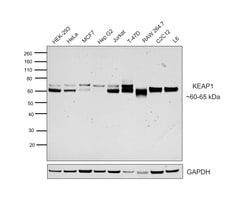
- In Western blot bands can be seen ∽95 kDa for isoform A and ∽110 kDa for isoform B
- Suggested positive control: rat brain
- Huntington's disease (HD), a neurodegenerative disorder characterized by loss of striatal neurons, is caused by an expansion of a polyglutamine tract in the HD protein huntingtin
- HAP1 was initially identified through a two-hybrid library screening; the binding of HAP1 to huntingtin correlated with the expansion of the polyglutamine tract
- HAP1 also interacts with two cytoskeletal proteins (dynactin and pericentriolar autoantigen protein 1), suggesting that HAP1 may play a role in vesicular trafficking or organelle transport
- HAP1 is also involved with the huntingtin-enhanced BDNF transport along the cellular microtubles
- Attenuation of this process led to the loss of neurotrophic support and neuronal toxicity, which suggests that loss of this function might contribute to pathogenesis
- Several alternatively spliced isoforms have been described for HAP1.