MA180893
Axonal Growth Cones Monoclonal Antibody (2G13), Invitrogen™
Manufacturer: Thermo Scientific
Select a Size
| Pack Size | SKU | Availability | Price |
|---|---|---|---|
| Each of 1 | MA180893-Each-of-1 | In Stock | ₹ 50,507.50 |
MA180893 - Each of 1
In Stock
Quantity
1
Base Price: ₹ 50,507.50
GST (18%): ₹ 9,091.35
Total Price: ₹ 59,598.85
Antigen
Axonal Growth Cones
Classification
Monoclonal
Concentration
Conc. Not Determined
Formulation
tissue culture supernatant with 5-10% FBS and 0.09% sodium azide
Host Species
Mouse
Quantity
2 mL
Primary or Secondary
Primary
Content And Storage
Store at 4°C short term. For long term storage, store at -20°C, avoiding freeze/thaw cycles.
Form
Liquid
Applications
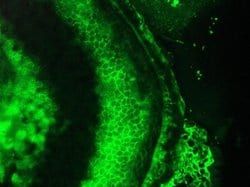
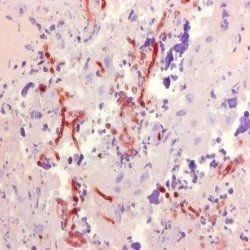
Immunohistochemistry (Frozen), Immunohistochemistry (Paraffin)
Clone
2G13
Conjugate
Unconjugated
Gene Alias
2G13P
Immunogen
Embryonic chick tectal membranes.
Regulatory Status
RUO
Target Species
Chicken, Mouse, Rat
Product Type
Antibody
Isotype
IgM
Related Products



Description
- This product does not require protein digestion pre-treatment of paraffin embedded sections
- This product does not require antigen retrieval using heat treatment prior to staining of paraffin embedded sections
- Mouse anti Growth Cone antibody, clone 2G13 recognizes a protein originally termed 2G13P which is localized to growth cones
- This protein was originally termed 2G13P, which is localized to growth cones
- Subsequent investigation has identified this protein to be 40S ribosomal protein SA, also known as 37 kDa laminin receptor precursor or Laminin receptor 1 (Baloui et al
- 2004)
- 40S ribosomal protein SA is a 296 amino acid ∽37kDa membrane, cytoplasmic and nuclear protein required for the assembly and/or stability of the 40S ribosomal subunit
- In vertebrate evolution the molecule has acquired a secondary function as a laminin receptor (UniProt: P50890)
- In growth cones expression is notable particularly in filopodia and lamellipodia in developing rat CNS and embryonic neurons in culture (Stettler et al
- 1999)
- 40S ribosomal protein SA interacts with the filamentous actin cytoskeleton and therefore may be involved in growth cone motility (Stettler et al
- 1999).