MABN770MI
MilliporeSigma™ Mouse anti-Melanopsin, Clone: 1F8.1,
Manufacturer: MilliporeSigma™
Select a Size
| Pack Size | SKU | Availability | Price |
|---|---|---|---|
| Each of 1 | MABN770MI-Each-of-1 | In Stock | ₹ 44,937.88 |
MABN770MI - Each of 1
In Stock
Quantity
1
Base Price: ₹ 44,937.88
GST (18%): ₹ 8,088.818
Total Price: ₹ 53,026.698
Antigen
Melanopsin
Classification
Monoclonal
Formulation
Purified mouse monoclonal IgG2aλ antibody in buffer containing 0.1M Tris-Glycine (pH 7.4), 150mM NaCl with 0.05% sodium azide.
Gene Symbols
OPN4; MOP
Immunogen
GST-tagged recombinant protein corresponding to human Melanopsin C-terminal sequence
Quantity
100 μg
Research Discipline
Neuroscience
Gene ID (Entrez)
NP_150598
Content And Storage
Stable for one year at 2°C to 8°C from date of receipt.
Isotype
IgG2a λ
Applications
Immunohistochemistry (Paraffin), Western Blot
Clone
1F8.1
Gene Accession No.
Q9UHM6
Host Species
Mouse
Purification Method
Protein G Purified
Regulatory Status
RUO
Primary or Secondary
Primary
Target Species
Human
Form
Purified
Related Products






Description
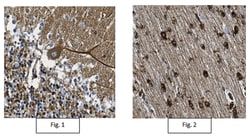
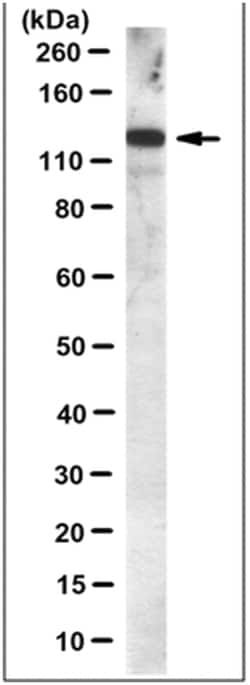
- Specifically detects Melanopsin clone: 1F8.1 in Human samples, and it is validated for Immunohistochemistry (Paraffin), Western Blotting Melanopsin (UniProt Q9UHM6; also known as Opsin-4) is encoded by the OPN4 (also known as MOP) gene (Gene ID 94233) in human
- Opsins belong to the superfamily of G protein-coupled receptors (GPCRs)
- Melanopsin is a blue light-sensitive opsin protein that is capable of rendering cells intrinsically light responsive
- Melanopsin expression defines a population of retinal ganglion cells that are intrinsically photosensitive (ipRGCs)
- Melanopsin allows mammals to measure irradiance for centrally mediated responses such as circadian entrainment
- In addition, the information generated by melanopsin is used by the visual system as a signal for light adaptation
- Using melanopsin-dependent phototransduction mechanism coupled with extrinsic signals originating with rods and cones, ipRGCs can encode light levels over many decimal orders, allowing the visual system to adapt to a broad range of light intensity from starlight to broad daylight.