MABS1225MI
MilliporeSigma™ TXNIP, Mouse, Unlabeled, Clone: JY2,
Manufacturer: MilliporeSigma™
Select a Size
| Pack Size | SKU | Availability | Price |
|---|---|---|---|
| Each of 1 | MABS1225MI-Each-of-1 | In Stock | ₹ 38,958.86 |
MABS1225MI - Each of 1
In Stock
Quantity
1
Base Price: ₹ 38,958.86
GST (18%): ₹ 7,012.595
Total Price: ₹ 45,971.455
Antigen
TXNIP
Classification
Monoclonal
Concentration
Please refer to lot specific datasheet.
Formulation
Purified mouse IgG1κ in buffer containing 0.1M Tris-Glycine (pH 7.4), 150mM NaCl with 0.05% Sodium Azide.
Gene Accession No.
Q9H3M7
Immunogen
Recombinant full-length human TXNIP protein.
Quantity
100 μL
Research Discipline
Signaling
Gene ID (Entrez)
NP_006463.3
Target Species
Human
Form
Purified
Applications
Western Blot
Clone
JY2
Conjugate
Unconjugated
Gene
TXNIP, VDUP1
Host Species
Mouse
Purification Method
Protein G Purified
Regulatory Status
RUO
Primary or Secondary
Primary
Test Specificity
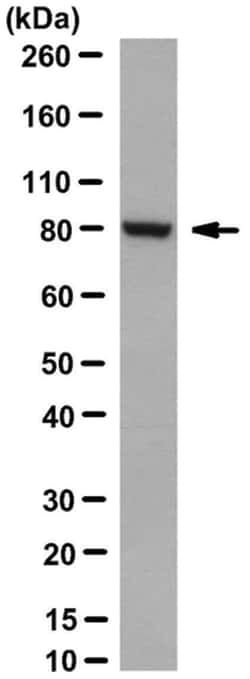
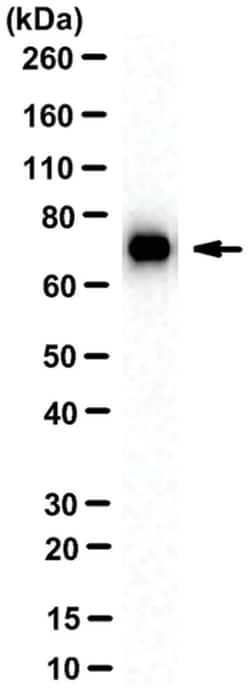
Clone JY2 detected TXNIP in adult mouse cardiomyocytes. No TXNIP target band was detected in cardiomyocytes from Txnip-null mice (Yoshioka, J., et al. (2007). Circ. Res. 101(12):1328-1338).
Content And Storage
Stable for 1 year at 2°-8°C from date of receipt.
Isotype
IgG1 κ
Related Products




Description
- Thioredoxin-interacting protein (UniProt Q9H3M7; also known as Thioredoxin-binding protein 2, Vitamin D3 up-regulated protein 1) is encoded by the TXNIP (also known as VDUP1) gene (Gene ID 10628) in human
- Thioredoxin interacting protein (TXNIP) is an alpha-arrestin protein that acts as an oxidative stress mediator that binds thioredoxin active cysteine residue and suppresses its antioxidant activity
- Interacts with COPS5 and restores COPS5-induced suppression of CDKN1B stability, blocking the COPS5-mediated translocation of CDKN1B from the nucleus to the cytoplasm
- TXNIP over-expression results in increased cellular ROS level and oxidative cell death, while TXNIP suppression enhances cellular resistance to oxidative injury
- TXNIP is also shown to inhibit cellular glucose uptake by downregulating plasma membrane localization of glucose transporter 1 (GLUT1)
- TXNIP is required for the maturation of natural killer cells
- Its expression is markedly down-regulated in tumor cells and its levels are correlated with clinical stage of cancer
- Mice with mutations or knockout of TXNIP gene are much more susceptible to carcinogenesis than wild-type mice, indicating its role in cancer suppression
- Ref.: Masutani, H., et al
- (2012)
- J
- Clin
- Biochem
- Nutr
- 50, 23-34.