alpha-1a Adrenergic Receptor Polyclonal Antibody, Invitrogen™
Manufacturer: Thermo Scientific
Select a Size
| Pack Size | SKU | Availability | Price |
|---|---|---|---|
| Each of 1 | PA1047-Each-of-1 | In Stock | ₹ 48,683.00 |
PA1047 - Each of 1
In Stock
Quantity
1
Base Price: ₹ 48,683.00
GST (18%): ₹ 8,762.94
Total Price: ₹ 57,445.94
Antigen
alpha-1a Adrenergic Receptor
Classification
Polyclonal
Conjugate
Unconjugated
Gene
ADRA1A
Gene Alias
ADA1; adra1a; adra1aa; Adra1c; ADRA1L1; adrenergic alpha 1c receptor; adrenergic receptor alpha 1c subtype; adrenergic receptor, alpha 1a; adrenergic receptor, alpha 1c; adrenergic, alpha-1A-, receptor; adrenergic, alpha-1Aa, receptor; adrenoceptor alpha 1A; adrenoceptor alpha 1Aa; alpha 1A-adrenoceptor; alpha 1A-adrenoreceptor; alpha 1C-adrenergic receptor; alpha-1A adrenergic receptor; Alpha-1A adrenoceptor; alpha-1A adrenoreceptor; ALPHA1AAR; Alpha-1C adrenergic receptor; Alpha1C-AR; Alpha-adrenergic receptor 1c; fc18h12; G protein coupled receptor; wu:fc18h12
Host Species
Rabbit
Purification Method
Antigen affinity chromatography
Regulatory Status
RUO
Gene ID (Entrez)
11549, 148, 29412, 798498
Content And Storage
-20° C, Avoid Freeze/Thaw Cycles
Form
Liquid
Applications
Immunocytochemistry, Immunohistochemistry (Paraffin), Western Blot
Concentration
0.5 mg/mL
Formulation
PBS with 1mg/mL BSA and 0.05% sodium azide
Gene Accession No.
P35348, P43140, P97718
Gene Symbols
ADRA1A, adra1aa
Immunogen
Synthetic peptide corresponding to residues K(339) F S R E K K A A K T(349) of the 3rd intracellular loop of human A1AR.
Quantity
100 μL
Primary or Secondary
Primary
Target Species
Drosophila, Human, Mouse, Rat, Zebrafish
Product Type
Antibody
Isotype
IgG
Related Products



Description
- PA1-047 detects alpha-1 adrenergic receptor (A1AR) from human, mouse, rat, zebra fish (Danio rerio) and Drosophila samples
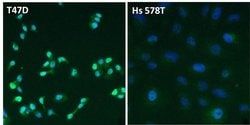
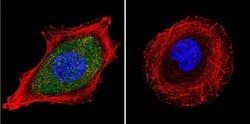
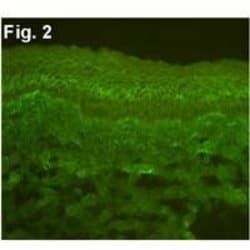
- PA1-047 has been successfully used in Western blot, immunohistochemistry and immunofluorescence procedures
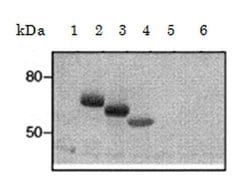
- By Western blot, this antibody detects an ∽60 kDa protein representing the A1AR from mouse kidney membrane preparations, mouse liver, HeLa cell lysates, zebra fish and drosophila samples
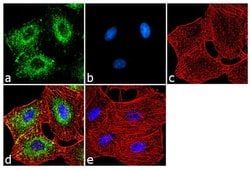
- Immunofluorescence staining of A1AR in mouse kidney distal tubule cells with PA1-047 results in staining of the plasma membrane
- The PA1-047 immunogen is a synthetic peptide corresponding to residues K(339) F S R E K K A A K T(349) of the 3rd intracellular loop of human A1AR
- This sequence is 100% conserved in all A1AR subtypes examined
- PA1-047 immunizing peptide (Cat
- # PEP-216) is available for use in neutralization and control experiments
- Adrenergic receptors (ARs) are members of the 7-transmembrane domain G-protein-coupled receptor superfamily that bind the endogenous catecholamines epinephrine and norepinephrine
- Pharmacological, structural, and molecular cloning data indicate significant heterogeneity within this receptor family
- Nine receptor subtypes have been identified thus far including three alpha-1 AR subtypes (1A/D, 1B, and 1C), three alpha-2 ARs (2A, 2B, and 2C), and three beta AR subtypes (1, 2, and 3)
- ARs participate in either the onset or maintenance of several disease states including hypertension, cardiac dysfunction (congestive heart failure, ischemia, arrhythmias), diabetes, glaucoma, depression, and impotence
- A1AR subtypes are found in numerous tissues and have been shown to be involved in the regulation of blood pressure due to changes in vascular tone and cardiac output
- Effects on uterine contraction, hepatic glucose metabolism, heat shock protein 70 (HSP70), proto-oncogene expression, and mitogenesis have been linked to A1AR activation
- Norepinephrine can increase nitric oxide synthase (NOS) levels in the hypothalamus by activating alpha-1 AR which may indirectly suppress the release of luteinizing hormone (LH), the androgens, estrogen, and progesterone.