ABLIM1 Polyclonal Antibody, Invitrogen™
Manufacturer: Thermo Scientific
Select a Size
| Pack Size | SKU | Availability | Price |
|---|---|---|---|
| Each of 1 | PA550292-Each-of-1 | In Stock | ₹ 46,502.50 |
PA550292 - Each of 1
In Stock
Quantity
1
Base Price: ₹ 46,502.50
GST (18%): ₹ 8,370.45
Total Price: ₹ 54,872.95
Antigen
ABLIM1
Classification
Polyclonal
Conjugate
Unconjugated
Gene
ABLIM1
Gene Alias
2210411C18Rik; 2610209L21Rik; 4833406P10Rik; 9330196J19Rik; ABLIM; ABLIM1; abLIM-1; actin binding LIM protein 1; actin-binding double zinc finger protein; actin-binding double-zinc-finger protein; actin-binding LIM protein 1; Actin-binding LIM protein family member 1; AV079770; AW060987; AW215784; KIAA0059; LIMAB1; Limatin; mKIAA0059; RGD1565768
Host Species
Rabbit
Purification Method
Antigen affinity chromatography
Regulatory Status
RUO
Gene ID (Entrez)
226251, 3983
Content And Storage
-20°C
Form
Liquid
Applications
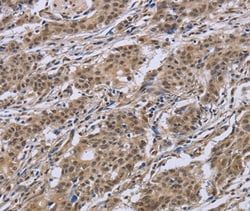
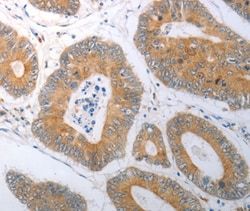
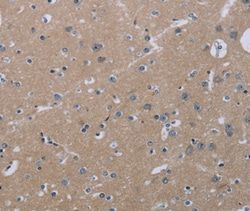
Immunohistochemistry (Paraffin), Western Blot
Concentration
1.3 mg/mL
Formulation
PBS with 40% glycerol and 0.05% sodium azide; pH 7.4
Gene Accession No.
O14639, Q8K4G5
Gene Symbols
ABLIM1
Immunogen
Fusion protein corresponding to a region derived from internal residues of human Actin binding LIM protein 1
Quantity
100 μL
Primary or Secondary
Primary
Target Species
Human, Mouse
Product Type
Antibody
Isotype
IgG
Related Products




Description
- The antibody detects endogenous levels of total ABLIM1 protein
- This gene encodes a cytoskeletal LIM protein that binds to actin filaments via a domain that is homologous to erythrocyte dematin
- LIM domains, found in over 60 proteins, play key roles in the regulation of developmental pathways
- LIM domains also function as protein-binding interfaces, mediating specific protein-protein interactions
- The protein encoded by this gene could mediate such interactions between actin filaments and cytoplasmic targets
- Alternatively spliced transcript variants encoding different isoforms have been identified.