PIMA512400
CD138 Monoclonal Antibody (MI15), Invitrogen™
Manufacturer: Thermo Scientific
Select a Size
| Pack Size | SKU | Availability | Price |
|---|---|---|---|
| Each of 1 | PIMA512400-Each-of-1 | In Stock | ₹ 50,507.50 |
PIMA512400 - Each of 1
In Stock
Quantity
1
Base Price: ₹ 50,507.50
GST (18%): ₹ 9,091.35
Total Price: ₹ 59,598.85
Antigen
CD138
Classification
Monoclonal
Concentration
Conc. Not Determined
Formulation
tissue culture supernatant with 0.09% sodium azide
Gene Accession No.
P18827, P26260
Gene Symbols
Sdc1
Immunogen
U-266 cells
Regulatory Status
RUO
Gene ID (Entrez)
25216, 6382
Content And Storage
4° C
Form
Liquid
Applications
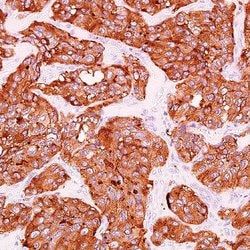
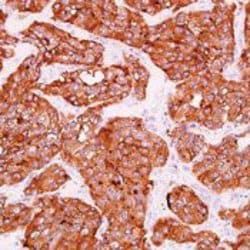
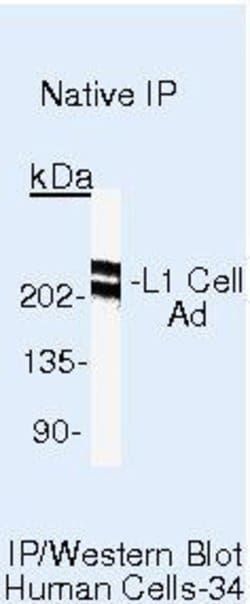
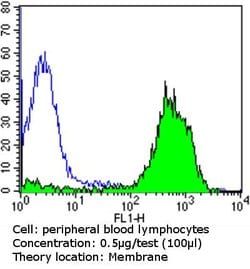
Flow Cytometry, Immunohistochemistry (Paraffin), Immunoprecipitation, Western Blot
Clone
MI15
Conjugate
Unconjugated
Gene
Sdc1
Gene Alias
AA408134; AA409076; CD antigen 138; CD138; CD138 antigen; heparan sulfate proteoglycan fibroblast growth factor receptor; HSPG; sCD138; SDC; Sdc1; soluble CD138; Sstn; syn-1; Synd; SYND1; Synd-1; SYNDECA; syndecan; syndecan 1; syndecan proteoglycan 1; Syndecan1; syndecan-1; synstatin
Host Species
Mouse
Quantity
500 μL
Primary or Secondary
Primary
Target Species
Human, Rat
Product Type
Antibody
Isotype
IgG1 κ
Related Products
Description
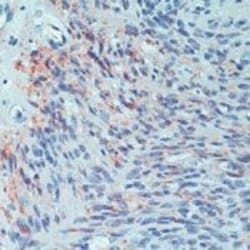
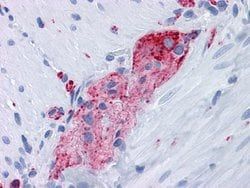
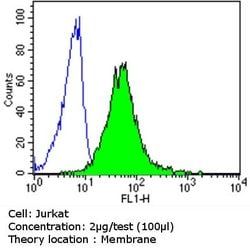
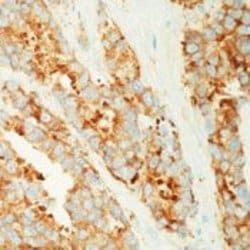
- MA5-12400 targets CD138 in IHC (P), FACS, IP, and WB applications and shows reactivity with Human and Rat samples
- The MA5-12400 immunogen is u-266 cells
- CD138 (syndecan 1) is a transmembrane proteoglycan that can bind a variety of cytokines and modulate their activity, as well as the activity of extracellular matrix components and influence many developmental processes
- CD138 is expressed mainly in differentiating keratinocytes and is transiently upregulated in all layers of the epidermis upon tissue injury
- It is also highly expressed on plasma cells and can be detected even on fibroblasts, vascular smooth muscle cells and endothelial cells
- Up-regulation and down-regulation of CD138 on the cell surface often correlates with the gain of cancerous characteristics
- Serum levels of the shedded soluble sCD138 are used as a prognostic factor of cancerogenesis.