PKC zeta Monoclonal Antibody (S.228.2), Invitrogen™
Manufacturer: Thermo Scientific
Select a Size
| Pack Size | SKU | Availability | Price |
|---|---|---|---|
| Each of 1 | PIMA514995-Each-of-1 | In Stock | ₹ 41,385.00 |
PIMA514995 - Each of 1
In Stock
Quantity
1
Base Price: ₹ 41,385.00
GST (18%): ₹ 7,449.30
Total Price: ₹ 48,834.30
Antigen
PKC zeta
Classification
Monoclonal
Conjugate
Unconjugated
Gene
PRKCZ
Gene Alias
14 - 3 - 3 - zeta isoform; 14-3-3-zetaisoform; AI098070; aPKCzeta; atypical protein kinase C; C80388; kinase nPKC-zeta; KPCZ; nPKC-zeta; nPKC-zeta PRKCZ; PKC2; Pkcz; PKC-ZETA; Prkcz; protein kinase C zeta; protein kinase C zeta subspecies; protein kinase C zeta type; protein kinase C, zeta; r14-3-3; R74924; zetaPKC
Host Species
Rabbit
Purification Method
Affinity chromatography
Regulatory Status
RUO
Gene ID (Entrez)
18762, 25522, 5590
Content And Storage
-20°C
Form
Liquid
Applications
Western Blot
Clone
S.228.2
Formulation
0.01M HEPES with 0.15M NaCl, 100μg/mL BSA, 50% glycerol and <0.02% sodium azide; pH 7.5
Gene Accession No.
P09217, Q02956, Q05513
Gene Symbols
PRKCZ
Immunogen
Synthetic peptide corresponding to human PKC zeta.
Quantity
100 μL
Primary or Secondary
Primary
Target Species
Human, Mouse, Non-human Primate, Rat
Product Type
Antibody
Isotype
IgG
Related Products

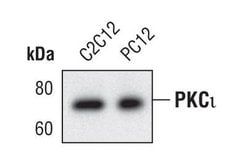
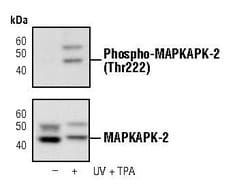
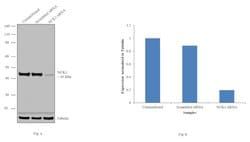
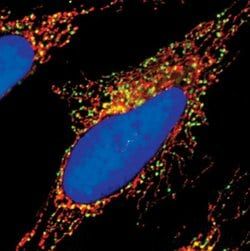
Description
- It is not recommended to aliquot this antibody
- This antibody is not cross-reactive with other PKC isoforms
- The PKC family of serine/threonine kinases, including PRKCZ (PKC zeta), is activated intracellularly by signal transduction pathways
- In humans, at least 12 different PKC polypeptides have been identified
- These isoforms differ in primary structure, tissue distribution, subcellular localization, mode of action in vitro, response to extracellular signals, and substrate specificity
- PKC alpha, beta I, beta II and gamma form the conventional family; their activities are Ca2+- and phospholipid-dependent
- PKC zeta plays a key regulatory role in a variety of cellular functions including cell growth and differentiation, gene expression, hormone secretion and membrane function.