PIMA515315
INHA Monoclonal Antibody (4A2), Invitrogen™
Manufacturer: Thermo Scientific
Select a Size
| Pack Size | SKU | Availability | Price |
|---|---|---|---|
| Each of 1 | PIMA515315-Each-of-1 | In Stock | ₹ 49,350.50 |
PIMA515315 - Each of 1
In Stock
Quantity
1
Base Price: ₹ 49,350.50
GST (18%): ₹ 8,883.09
Total Price: ₹ 58,233.59
Antigen
INHA
Classification
Monoclonal
Concentration
1.0 mg/mL
Formulation
PBS with 0.03% sodium azide
Gene Accession No.
P05111
Gene Symbols
INHA
Immunogen
Purified recombinant fragment of human INHA expressed in E. Coli.
Quantity
100 μg
Primary or Secondary
Primary
Target Species
Human
Product Type
Antibody
Isotype
IgG1
Applications
ELISA, Immunocytochemistry, Immunohistochemistry
Clone
4A2
Conjugate
Unconjugated
Gene
INHA
Gene Alias
A inhibin subunit; A-inhibin subunit; AW555078; IHA; Inha; inhibin; inhibin alpha; inhibin alpha chain; inhibin alpha subunit
Host Species
Mouse
Purification Method
Protein G
Regulatory Status
RUO
Gene ID (Entrez)
3623
Content And Storage
Store at 4°C short term. For long term storage, store at -20°C, avoiding freeze/thaw cycles.
Form
Liquid
Related Products
Description
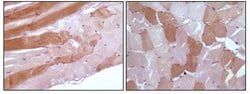
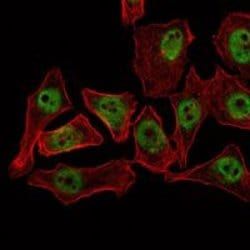
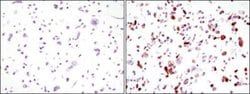
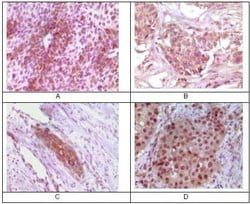
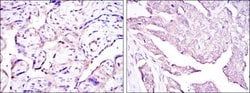
- MA5-15315 targets INHA (Inhibin alpha) in indirect ELISA, IF and IHC applications and shows reactivity with Human samples
- The MA5-15315 immunogen is purified recombinant fragment of human INHA expressed in E
- Coli
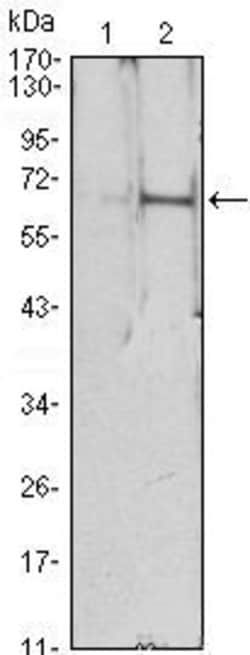
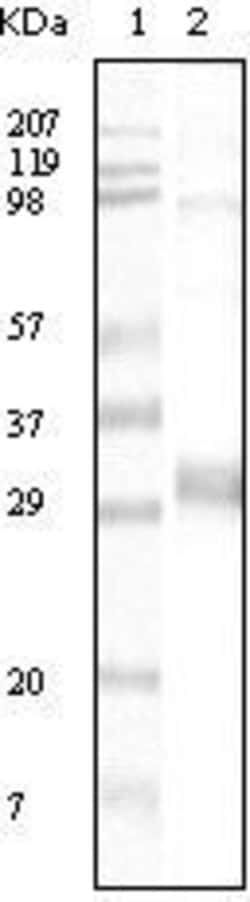
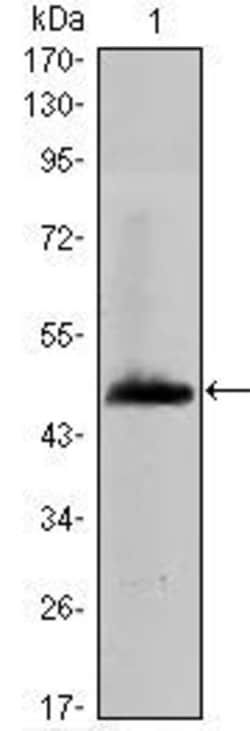
- MA5-15315 detects INHA (Inhibin alpha) which has a predicted molecular weight of approximately 40kDa
- The inhibin alpha subunit joins either the beta A or beta B subunit to form a pituitary FSH secretion inhibitor
- Inhibin has been shown to regulate gonadal stromal cell proliferation negatively and to have tumor-suppressor activity
- In addition, serum levels of inhibin have been shown to reflect the size of granulosa-cell tumors and can therefore be used as a marker for primary as well as recurrent disease
- However, in prostate cancer, expression of the inhibin alpha-subunit gene was suppressed and was not detectable in poorly differentiated tumor cells
- Furthermore, because expression in gonadal and various extragonadal tissues may vary severalfold in a tissue-specific fashion, it is proposed that inhibin may be both a growth/differentiation factor and a hormone.