Glypican 3 Monoclonal Antibody (SP86), Invitrogen™
Manufacturer: Thermo Scientific
Select a Size
| Pack Size | SKU | Availability | Price |
|---|---|---|---|
| Each of 1 | PIMA516368-Each-of-1 | In Stock | ₹ 61,855.00 |
PIMA516368 - Each of 1
In Stock
Quantity
1
Base Price: ₹ 61,855.00
GST (18%): ₹ 11,133.90
Total Price: ₹ 72,988.90
Antigen
Glypican 3
Classification
Monoclonal
Concentration
0.466 mg/mL
Formulation
PBS with 1% BSA and 0.1% sodium azide; pH 7.2
Gene Accession No.
P51654
Gene Symbols
GPC3
Immunogen
Synthetic peptide derived from C-terminus of human glypican-3 protein.
Quantity
500 μL
Primary or Secondary
Primary
Target Species
Human
Product Type
Antibody
Isotype
IgG
Applications
Flow Cytometry, Immunocytochemistry, Immunohistochemistry (Paraffin), Western Blot
Clone
SP86
Conjugate
Unconjugated
Gene
GPC3
Gene Alias
defective in Simpson-Golabi-Behmel overgrowth syndrome; DGSX; glypican 3; glypican proteoglycan 3; glypican-3; Glypican-3 alpha subunit; Glypican-3 beta subunit; Gpc3; GTR22; GTR2-2; heparan sulphate proteoglycan; intestinal protein OCI-5; MXR7; OCI5; OCI-5; proteoglycan GPC3; SDYS; secreted glypican-3; SGB; SGBS; SGBS1
Host Species
Rabbit
Purification Method
Protein A
Regulatory Status
RUO
Gene ID (Entrez)
2719
Content And Storage
-20° C, Avoid Freeze/Thaw Cycles
Form
Liquid
Related Products
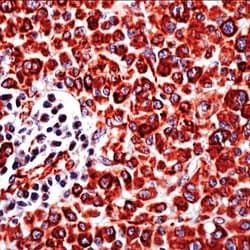
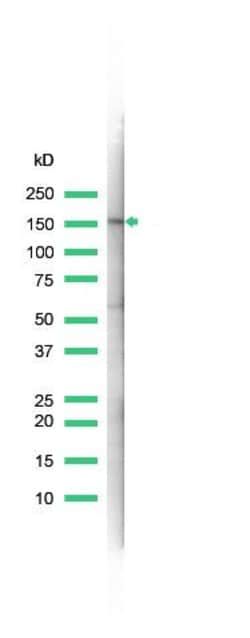
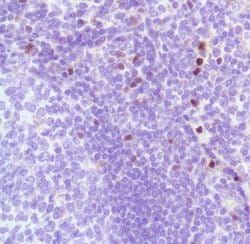
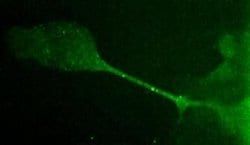
Description
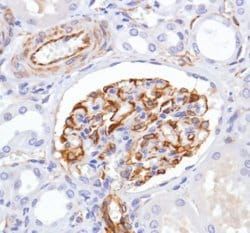
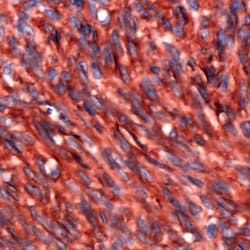
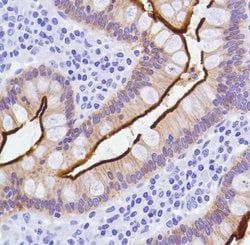
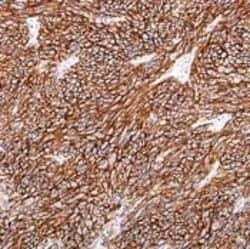
- Heat-mediated antigen retrieval is recommended prior to staining, using a 10mM citrate buffer, pH 6.0, for 10 minutes followed by cooling at room temperature for 20 min
- Following antigen retrieval, incubate samples with primary antibody for 30 min at room temperature
- A suggested positive control is placenta or liver carcinoma
- GPC3 is a cell surface proteoglycan that bears heparan sulfate
- This protein may be involved in the suppression/modulation of growth in the predominantly mesodermal tissues and organs, and may play a role in the modulation of IGF2 interactions with its receptor and thereby modulate its function
- Members of the glypican-related integral membrane proteoglycan family contain a core protein anchored to the cytoplasmic membrane via a glycosyl phosphatidylinositol (GPI) linkage
- These proteins may play a role in the control of cell division, growth regulation, and tumor predisposition
- Deletion mutations in GPC3 are the cause of Simpson-Golabi-Behmel syndrome (SGBS), also known as Simpson dysmorphia syndrome (SDYS)
- SGBS is a condition characterized by pre- and postnatal overgrowth (gigantism) with visceral and skeletal anomalies.