CRMP2 Monoclonal Antibody (OTI5D7), Invitrogen™
Manufacturer: Thermo Scientific
Select a Size
| Pack Size | SKU | Availability | Price |
|---|---|---|---|
| Each of 1 | PIMA527498-Each-of-1 | In Stock | ₹ 55,447.00 |
PIMA527498 - Each of 1
In Stock
Quantity
1
Base Price: ₹ 55,447.00
GST (18%): ₹ 9,980.46
Total Price: ₹ 65,427.46
Antigen
CRMP2
Classification
Monoclonal
Concentration
1 mg/mL
Formulation
PBS with 1% BSA, 50% glycerol and 0.02% sodium azide; pH 7.3
Gene Accession No.
O08553, P47942, Q16555
Gene Symbols
DPYSL2
Immunogen
Human recombinant protein fragment corresponding to amino acids 13-490 of DPYSL2 produced in E.coli
Quantity
100μL
Primary or Secondary
Primary
Target Species
Human, Mouse, Rat
Product Type
Antibody
Isotype
IgG2b
Applications
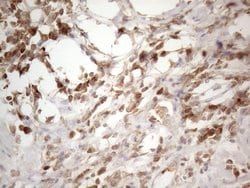
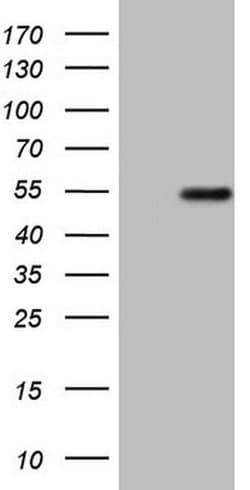
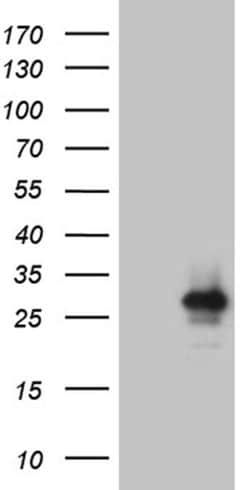
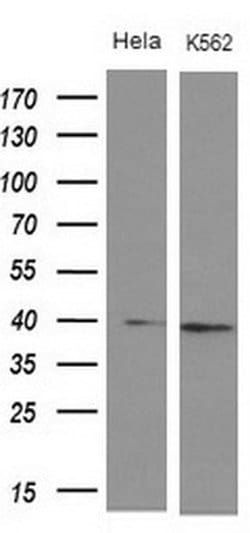
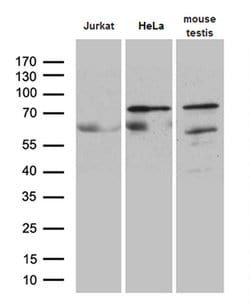
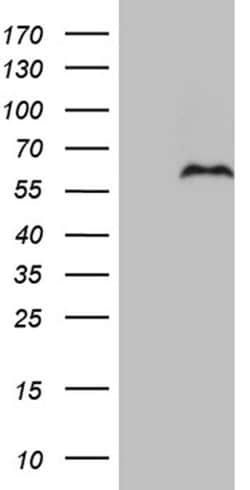
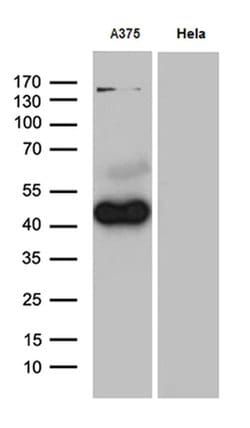
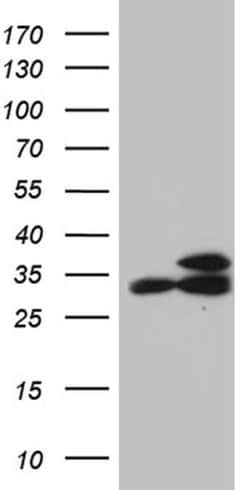
Western Blot
Clone
OTI5D7
Conjugate
Unconjugated
Gene
DPYSL2
Gene Alias
AI851130; collapsin response mediator protein 2; collapsin response mediator protein hCRMP-2; CRMP2; CRMP-2; DHPRP2; dihydropyrimidinase like 2; dihydropyrimidinase-like 2; dihydropyrimidinase-related protein 2; DPYL2; Dpysl2; DRP2; DRP-2; Musunc33; N2A3; Neural-specific protein NSP60; TOAD-64; turned on after division 64; turned on after division 64 kDa protein; turned on after division, 64 kDa protein; ULIP2; ULIP-2; unc-33-like phosphoprotein 2; Unknown (protein for MGC:137406)
Host Species
Mouse
Purification Method
Affinity Chromatography
Regulatory Status
RUO
Gene ID (Entrez)
12934, 1808, 25416
Content And Storage
-20° C, Avoid Freeze/Thaw Cycles
Form
Liquid
Related Products
Description
- Necessary for signaling by class 3 semaphorins and subsequent remodeling of the cytoskeleton
- Plays a role in axon guidance, neuronal growth cone collapse and cell migration.