CD21 Recombinant Rabbit Monoclonal Antibody (SC0681), Invitrogen™
Manufacturer: Thermo Scientific
Select a Size
| Pack Size | SKU | Availability | Price |
|---|---|---|---|
| Each of 1 | PIMA532227-Each-of-1 | In Stock | ₹ 47,659.50 |
PIMA532227 - Each of 1
In Stock
Quantity
1
Base Price: ₹ 47,659.50
GST (18%): ₹ 8,578.71
Total Price: ₹ 56,238.21
Antigen
CD21
Classification
Monoclonal
Concentration
1 mg/mL
Formulation
TBS with 0.05% BSA, 40% Glycerol and 0.05% sodium azide, pH 7.4
Gene Accession No.
P19070, P20023
Gene Symbols
CR2
Immunogen
Synthetic peptide within Human CD21 aa 989-1033
Quantity
100 μL
Primary or Secondary
Primary
Target Species
Human, Mouse
Product Type
Antibody
Isotype
IgG
Applications
Immunocytochemistry, Immunohistochemistry, Western Blot, Immunohistochemistry, Western Blot
Clone
SC0681
Conjugate
Unconjugated
Gene
CR2
Gene Alias
C3b/C4b receptor, C3-binding protein, C3BR, C3DR, C4BR, CD21, CD35, CD35 antigen, cell surface receptor for C3d, complement C3b/C4b receptor 1 (Knops blood group), complement C3d receptor, Complement C3d receptor (C3DR), complement C3d receptor 2, complement component (3b/4b) receptor 1 (Knops blood group), complement component (3d/Epstein Barr virus) receptor 2, complement component 3b/4b receptor 1 (Knops blood group), complement component 3d receptor 2, complement component receptor 2, complement receptor 1 long isoform, complement receptor 2, complement receptor type 1, complement receptor type 1-like protein, complement receptor type 2, Complement Receptor type 2 (CR2), CR, CR1, Cr-1, CR1-L, Cr2, Cr-2, CVID7, EBV receptor, EBV-R, Epstein-Barr virus receptor, EVBR, expressed in B lymphocytes, KN, Knops blood group antigen, LOW QUALITY PROTEIN: complement receptor type 1, SLEB9
Host Species
Rabbit
Purification Method
Protein A
Regulatory Status
RUO
Gene ID (Entrez)
12902, 1380
Content And Storage
Store at 4°C short term. For long term storage, store at -20°C, avoiding freeze/thaw cycles.
Form
Liquid
Related Products
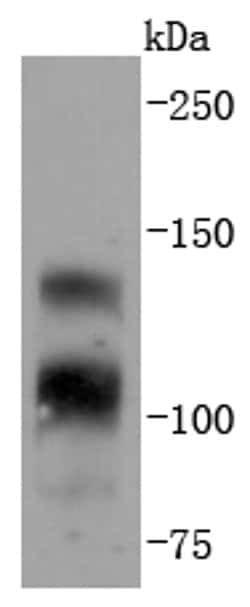
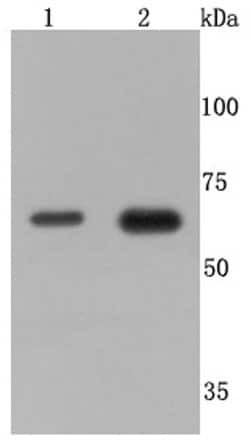
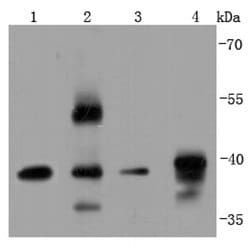
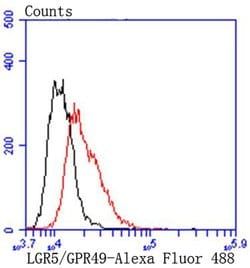
Description
- Recombinant rabbit monoclonal antibodies are produced using in vitro expression systems
- The expression systems are developed by cloning in the specific antibody DNA sequences from immunoreactive rabbits
- Then, individual clones are screened to select the best candidates for production
- The advantages of using recombinant rabbit monoclonal antibodies include: better specificity and sensitivity, lot-to-lot consistency, animal origin-free formulations, and broader immunoreactivity to diverse targets due to larger rabbit immune repertoire
- CD21 (complement receptor 2, CR2, C3D receptor, EBV receptor) binds C3 complement fragments, especially its breakdown fragments, which remain covalently attached to complement activating surfaces or antigen
- CD21 has important roles in uptake and retention of immunocomplexes, survival of memory B cells and in development and maintenance of the humoral response to T-dependent antigens
- CD21 also serves as a key receptor for Epstein-Barr virus binding and is involved in targeting prions to follicular dendritic cells and expediting neuroinvasion following peripheral exposure to prions
- A soluble form of the CD21 (sCD21) is shed from the lymphocyte surface and retains its ability to bind respective ligands
- CD21 functions as receptor for C3d, C3dg and iC3b complement components, for EBV and for IFNalpha
- CD21 binds to CD23 and associates with CD19, CD81 and Leu13 to form a large signal-transduction complex involved in B cell activation
- Genetic variations in the CD21 gene are associated with susceptibility to systemic lupus erythematosus type 9 (SLEB9)
- Alternatively, spliced transcript variants encoding different isoforms of CD21 have been found.