KIDINS220 Monoclonal Antibody (3-B6), Invitrogen™
Manufacturer: Thermo Scientific
Select a Size
| Pack Size | SKU | Availability | Price |
|---|---|---|---|
| Each of 1 | PIMA532869-Each-of-1 | In Stock | ₹ 47,481.50 |
PIMA532869 - Each of 1
In Stock
Quantity
1
Base Price: ₹ 47,481.50
GST (18%): ₹ 8,546.67
Total Price: ₹ 56,028.17
Antigen
KIDINS220
Classification
Monoclonal
Concentration
2 mg/mL
Formulation
PBS with 0.2% BSA, 40% Glycerol and 0.05% sodium azide, pH 7.4
Gene Accession No.
Q9ULH0
Gene Symbols
Kidins220
Immunogen
Recombinant protein with Human kinase D-interacting substrate 220 aa 1601-1771
Quantity
100 μL
Primary or Secondary
Primary
Target Species
Human, Mouse
Product Type
Antibody
Isotype
IgG1
Applications
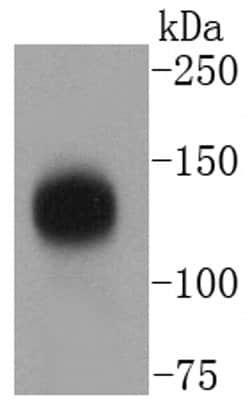
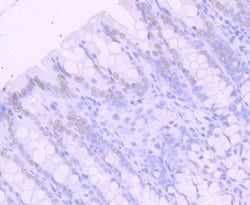
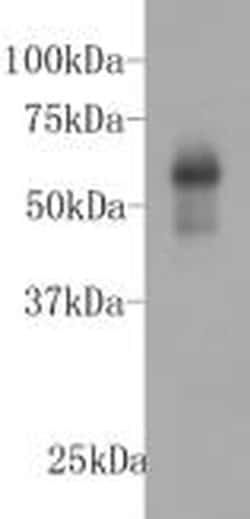
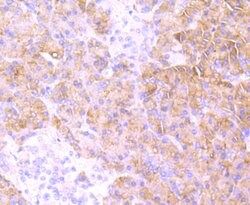
Immunocytochemistry, Immunohistochemistry, Western Blot, Western Blot
Clone
3-B6
Conjugate
Unconjugated
Gene
Kidins220
Gene Alias
3110039L19Rik, AI194387, AI316525, ankyrin repeat-rich membrane spanning, ankyrin repeat-rich membrane spanning protein, ankyrin repeat-rich membrane-spanning protein, ARMS, C330002I19Rik, KIAA1250, KIDINS220, kinase D-interacting substance 220, kinase D-interacting substance of 220 kDa, kinase D-interacting substrate 220, kinase D-interacting substrate 220kDa, kinase D-interacting substrate of 220 kDa, kinase D-interacting substrate, 220kDa, MGC163482, mKIAA1250, truncated KIDINS220
Host Species
Mouse
Purification Method
Protein A
Regulatory Status
RUO
Gene ID (Entrez)
57498, 77480
Content And Storage
Store at 4°C short term. For long term storage, store at -20°C, avoiding freeze/thaw cycles.
Form
Liquid
Related Products
Description
- Mouse Monoclonal Antibody This gene encodes a transmembrane protein that is preferentially expressed in the nervous system where it controls neuronal cell survival, differentiation into exons and dendrites, and synaptic plasticity
- The encoded protein interacts with membrane receptors, cytosolic signaling components, and cytoskeletal proteins, serving as a scaffold that mediates crosstalk between the neurotrophin pathway and several other intracellular signaling pathways
- Aberrant expression of this gene is associated with the onset of various neuropsychiatric disorders and neurodegenerative diseases, including Alzheimer's disease
- Naturally occurring mutations in this gene are associated with a syndrome characterized by spastic paraplegia, intellectual disability, nystagmus and obesity
- Alternative splicing results in multiple transcript variants.