Estrogen Receptor alpha Recombinant Rabbit Monoclonal Antibody (RM292), Invitrogen™
Manufacturer: Thermo Scientific
Select a Size
| Pack Size | SKU | Availability | Price |
|---|---|---|---|
| Each of 1 | PIMA533039-Each-of-1 | In Stock | ₹ 47,481.50 |
PIMA533039 - Each of 1
In Stock
Quantity
1
Base Price: ₹ 47,481.50
GST (18%): ₹ 8,546.67
Total Price: ₹ 56,028.17
Antigen
Estrogen Receptor alpha
Classification
Recombinant Monoclonal
Concentration
0.05 mg/mL
Formulation
PBS with 1% BSA, 50% glycerol and 0.09% sodium azide
Gene Accession No.
P03372
Gene Symbols
ESR1
Immunogen
A peptide corresponding to residues near the Nterminus of human ER-alpha.
Quantity
100 μL
Primary or Secondary
Primary
Target Species
Human
Product Type
Antibody
Isotype
IgG
Applications
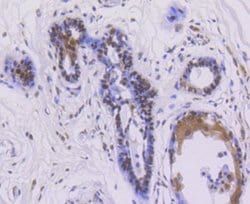
Immunohistochemistry (Paraffin), Western Blot
Clone
RM292
Conjugate
Unconjugated
Gene
ESR1
Gene Alias
DKFZp686N23123, ER, Er alpha, ER36, ERa, ERalpha, ER-alpha, ERalpha protein, ESR, esr 1, Esr1, esr-1, ESRA, Estr, Estra, Estradiol receptor, estrogen nuclear receptor alpha, Estrogen receptor, estrogen receptor 1, estrogen receptor 1 (alpha), estrogen receptor alpha, estrogen receptor alpha c-terminus splice variant 1-2, estrogen receptor alpha E1-E2-1-2, estrogen receptor alpha E1-N2-E2-1-2, estrogen receptor alpha splice variant, CTERP-1, estrogen receptor alpha splice variant, ERalphaDup5, estrogen receptor alpha splice variant, ERalphai45a, estrogen receptor alpha splice variant, ERalphai45bL, estrogen receptor alpha splice variant, ERalphai45bS, estrogen receptor alpha splice variant, ERalphai45c, estrogen receptor alpha splice variant, ERalphai56, estrogen receptor alpha splice variant, ERalphai67, estrogen receptor alpha variant delta 4, estrogen receptor protein, estrogen receptor, alpha, ESTRR, hER-alpha36, I79_001166, Nr3a1, nuclear receptor, nuclear receptor subfamily 3 grou
Host Species
Rabbit
Purification Method
Protein A
Regulatory Status
RUO
Gene ID (Entrez)
2099
Content And Storage
-20°C
Form
Liquid
Related Products

Description
- Specificity: reacts to human ER-alpha (Estrogen receptor)
- Recombinant rabbit monoclonal antibodies are produced using in vitro expression systems
- The expression systems are developed by cloning in the specific antibody DNA sequences from immunoreactive rabbits
- Then, individual clones are screened to select the best candidates for production
- The advantages of using recombinant rabbit monoclonal antibodies include: better specificity and sensitivity, lot-to-lot consistency, animal origin-free formulations, and broader immunoreactivity to diverse targets due to larger rabbit immune repertoire
- Estrogen Receptors (ER) are members of the steroid/thyroid hormone receptor superfamily of nuclear receptors
- The estrogen receptor is a ligand-activated transcription factor, that when bound to estrogen hormone, induces a conformational change that allows dimerization and binding to estrogen response elements (ERE) in DNA
- When bound to EREs, ER can positively or negatively regulate gene transcription through the recruitment of coactivator or corepressor proteins
- There are two different forms of the estrogen receptor, alpha and beta, encoded by separate genes (ESR1 and ESR2, respectively)
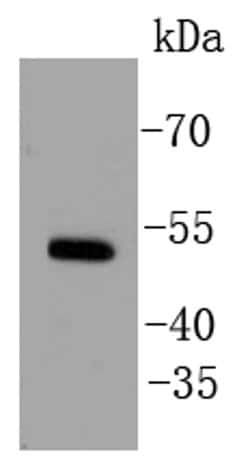
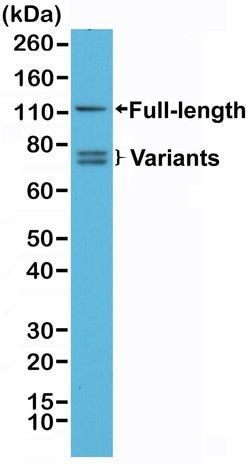
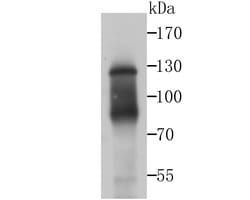
- Due to alternative RNA splicing, at least 4 estrogen receptor-alpha isoforms are known to exist (Isoform 1 (66 kDa), Isoform 2 (53 kDa), Isoform 3 (47 kDa), Isoform 4 (35 kDa))
- Estrogen receptors are widely expressed in different tissue types and are essential for sexual development and reproductive function
- They also play a role in other tissues such as bone
- Estrogen receptors are involved in pathological processes including breast cancer, endometrial cancer, and osteoporosis.