Phospho-Synapsin 1 (Ser9) Polyclonal Antibody, Invitrogen™
Manufacturer: Thermo Scientific
Select a Size
| Pack Size | SKU | Availability | Price |
|---|---|---|---|
| Each of 1 | PIPA5104822-Each-of-1 | In Stock | ₹ 46,502.50 |
PIPA5104822 - Each of 1
In Stock
Quantity
1
Base Price: ₹ 46,502.50
GST (18%): ₹ 8,370.45
Total Price: ₹ 54,872.95
Antigen
Phospho-Synapsin 1 (Ser9)
Classification
Polyclonal
Conjugate
Unconjugated
Gene
SYN1
Gene Alias
Brain protein 4.1; SYN1; Syn-1; SYN1a; SYN1b; Syn1-S; synapsin 1; synapsin I; synapsin Ia; synapsin Ib; synapsin-1; SYNI; truncated synapsin 1-S
Host Species
Rabbit
Purification Method
sequential chromatography
Regulatory Status
RUO
Gene ID (Entrez)
20964, 24949, 6853
Content And Storage
-20°C
Form
Liquid
Applications
Immunocytochemistry, Immunohistochemistry (Paraffin), Western Blot
Concentration
1 mg/mL
Formulation
PBS with 50% glycerol and 0.02% sodium azide; pH 7.4
Gene Accession No.
O88935, P09951, P17600
Gene Symbols
SYN1
Immunogen
A synthesized peptide derived from human SYN1(Accession P17600), corresponding to amino acid residues around phosphorylated Ser9.
Quantity
100 μL
Primary or Secondary
Primary
Target Species
Human, Mouse, Rat
Product Type
Antibody
Isotype
IgG
Related Products
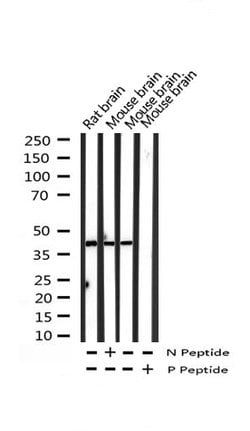
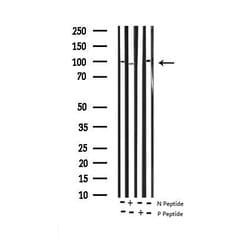
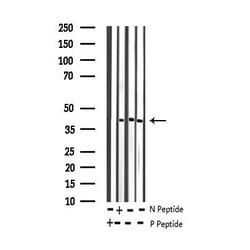
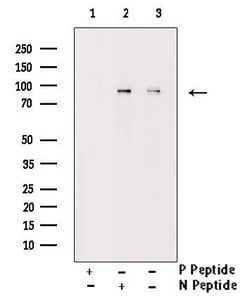
Description
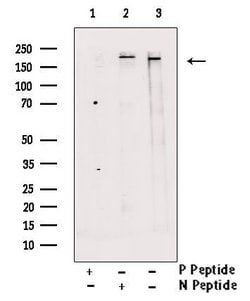
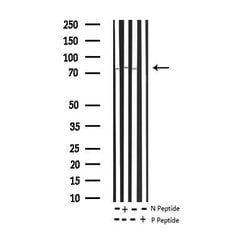
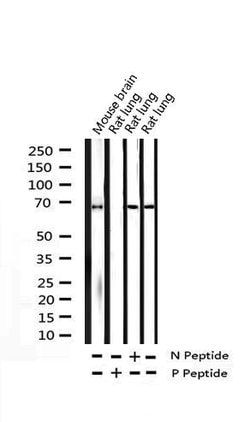
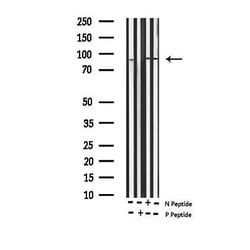
- Antibody detects endogenous levels of Synapsin I only when phosphorylated at Serine 9
- SYN1 (synapsin 1) is a member of the synapsin gene family
- Synapsins encode neuronal phosphoproteins that associate with the cytoplasmic surface of synaptic vesicles
- Family members are characterized by common protein domains and are implicated in synaptogenesis and the modulation of neurotransmitter release, suggesting a potential role in several neuropsychiatric diseases
- Synapsin 1 plays a role in regulation of axonogenesis and synaptogenesis
- It serves as a substrate for several different protein kinases and phosphorylation may function in the regulation of this protein in the nerve terminal
- Mutations in this gene may be associated with X-linked disorders with primary neuronal degeneration such as Rett syndrome
- Alternatively spliced transcript variants encoding different isoforms have been identified.