Phospho-ALK (Tyr1507) Polyclonal Antibody, Invitrogen™
Manufacturer: Thermo Scientific
Select a Size
| Pack Size | SKU | Availability | Price |
|---|---|---|---|
| Each of 1 | PIPA5105039-Each-of-1 | In Stock | ₹ 45,968.50 |
PIPA5105039 - Each of 1
In Stock
Quantity
1
Base Price: ₹ 45,968.50
GST (18%): ₹ 8,274.33
Total Price: ₹ 54,242.83
Antigen
Phospho-ALK (Tyr1507)
Classification
Polyclonal
Conjugate
Unconjugated
Gene
ALK
Gene Alias
Alk; ALK tyrosine kinase receptor; ALK/NPM1 fusion gene; anaplastic lymphoma kinase; Anaplastic lymphoma kinase Ki1; Anaplastic Lymphoma Kinase p80; anaplastic lymphoma receptor tyrosine kinase; CD246; CD246 antigen; EC 2.7.10.1; kinase ALK; mutant anaplastic lymphoma kinase; NBLST3; npm-alk; p80; Tcrz; TFG/ALK
Host Species
Rabbit
Purification Method
sequential chromatography
Regulatory Status
RUO
Gene ID (Entrez)
11682, 238
Content And Storage
-20°C
Form
Liquid
Applications
Immunocytochemistry, Immunohistochemistry (Paraffin), Western Blot
Concentration
1 mg/mL
Formulation
PBS with 50% glycerol and 0.02% sodium azide; pH 7.4
Gene Accession No.
P97793, Q9UM73
Gene Symbols
ALK
Immunogen
A synthesized peptide derived from human ALK(Accession Q9UM73), corresponding to amino acid residues around phosphorylated Tyr1507.
Quantity
100 μL
Primary or Secondary
Primary
Target Species
Human, Mouse, Non-human Primate
Product Type
Antibody
Isotype
IgG
Related Products
Description
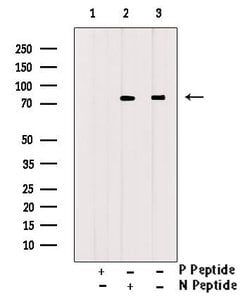
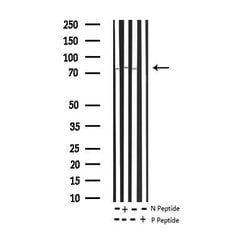
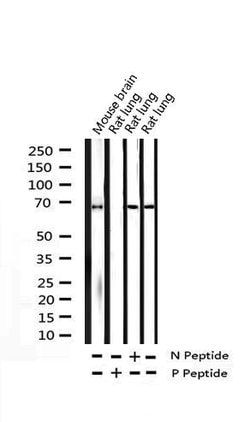
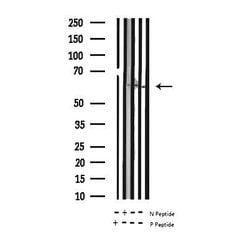
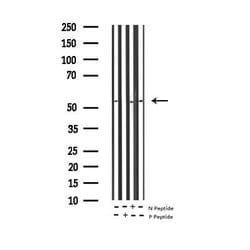
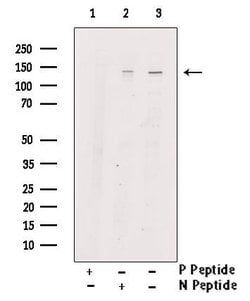
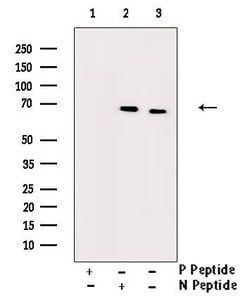
- Antibody detects endogenous levels of ALK only when phosphorylated at Tyrosine 1507
- Anaplastic Lymphoma Receptor Tyrosine Kinase (ALK) belongs to the insulin receptor superfamily
- It is vital for brain development
- Mutations, rearrangements, and amplifications in the ALK gene have been found in tumors, including anaplastic large cell lymphoma, neurblastoma, and non-small cell lung cancer
- Chromosomal rearrangement is the most common genetic alteration
- The translocation creates a fusion gene consisting of the ALK gene and the nucleophosmin gene: the 3' half of ALK, derived from chromosome 2, is fused to the 5' portion of NPM from chromosome 5
- A recent study shows that the product of the NPM-ALK fusion gene is oncogenic
- The deduced amino acid sequences reveal that ALK is a novel receptor protein-tyrosine kinase having a putative transmembrane domain and an extracellular domain
- These sequences are absent in the product of the transforming NPM-ALK gene
- ALK shows the greatest sequence similarity to LTK
- ALK plays an important role in the development of the brain and exerts its effects on specific neurons in the nervous system.