Phospho-ALK (Tyr1096) Polyclonal Antibody, Invitrogen™
Manufacturer: Thermo Scientific
Select a Size
| Pack Size | SKU | Availability | Price |
|---|---|---|---|
| Each of 1 | PIPA5105238-Each-of-1 | In Stock | ₹ 46,502.50 |
PIPA5105238 - Each of 1
In Stock
Quantity
1
Base Price: ₹ 46,502.50
GST (18%): ₹ 8,370.45
Total Price: ₹ 54,872.95
Antigen
Phospho-ALK (Tyr1096)
Classification
Polyclonal
Conjugate
Unconjugated
Gene
ALK
Gene Alias
Alk; ALK tyrosine kinase receptor; ALK/NPM1 fusion gene; anaplastic lymphoma kinase; Anaplastic lymphoma kinase Ki1; Anaplastic Lymphoma Kinase p80; anaplastic lymphoma receptor tyrosine kinase; CD246; CD246 antigen; EC 2.7.10.1; kinase ALK; mutant anaplastic lymphoma kinase; NBLST3; npm-alk; p80; Tcrz; TFG/ALK
Host Species
Rabbit
Purification Method
sequential chromatography
Regulatory Status
RUO
Gene ID (Entrez)
11682, 238, 266802
Content And Storage
-20°C
Form
Liquid
Applications
Immunohistochemistry (Paraffin), Western Blot
Concentration
1 mg/mL
Formulation
PBS with 50% glycerol and 0.02% sodium azide; pH 7.4
Gene Accession No.
P97793, Q9UM73
Gene Symbols
ALK
Immunogen
A synthesized peptide derived from human ALK(Accession Q9UM73), corresponding to amino acid residues around phosphorylated Tyr1096.
Quantity
100 μL
Primary or Secondary
Primary
Target Species
Human, Mouse, Rat
Product Type
Antibody
Isotype
IgG
Related Products
Description
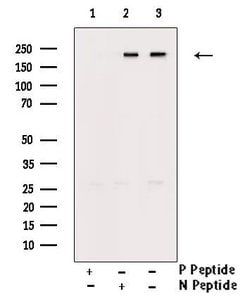
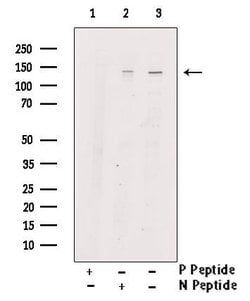
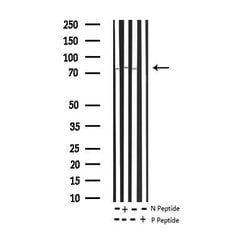
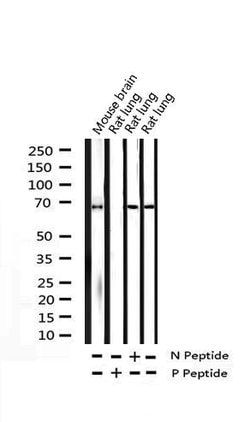
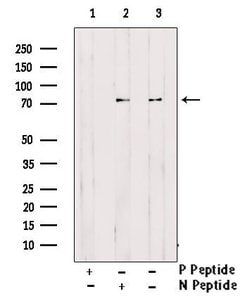
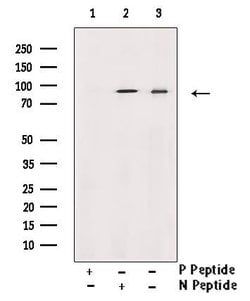
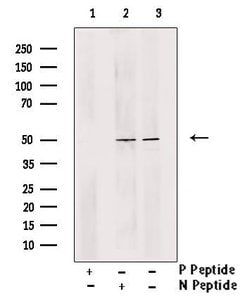
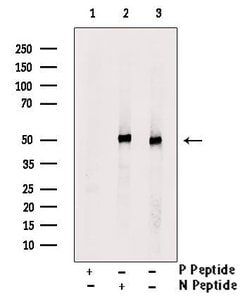
- Antibody detects endogenous levels of ALK only when phosphorylated at Tyr1096
- Anaplastic Lymphoma Receptor Tyrosine Kinase (ALK) belongs to the insulin receptor superfamily
- It is vital for brain development
- Mutations, rearrangements, and amplifications in the ALK gene have been found in tumors, including anaplastic large cell lymphoma, neurblastoma, and non-small cell lung cancer
- Chromosomal rearrangement is the most common genetic alteration
- The translocation creates a fusion gene consisting of the ALK gene and the nucleophosmin gene: the 3' half of ALK, derived from chromosome 2, is fused to the 5' portion of NPM from chromosome 5
- A recent study shows that the product of the NPM-ALK fusion gene is oncogenic
- The deduced amino acid sequences reveal that ALK is a novel receptor protein-tyrosine kinase having a putative transmembrane domain and an extracellular domain
- These sequences are absent in the product of the transforming NPM-ALK gene
- ALK shows the greatest sequence similarity to LTK
- ALK plays an important role in the development of the brain and exerts its effects on specific neurons in the nervous system.