Phospho-OPRK1 (Tyr369) Polyclonal Antibody, Invitrogen™
Manufacturer: Thermo Scientific
Select a Size
| Pack Size | SKU | Availability | Price |
|---|---|---|---|
| Each of 1 | PIPA5105162-Each-of-1 | In Stock | ₹ 46,502.50 |
PIPA5105162 - Each of 1
In Stock
Quantity
1
Base Price: ₹ 46,502.50
GST (18%): ₹ 8,370.45
Total Price: ₹ 54,872.95
Antigen
Phospho-OPRK1 (Tyr369)
Classification
Polyclonal
Conjugate
Unconjugated
Gene
OPRK1
Gene Alias
kappa opioid receptor; kappa-type opioid receptor; KOPR1; KOR; K-OR-1; KOR-1; MSL-1; Opiate receptor, kappa-1; opioid receptor kappa 1; opioid receptor, kappa 1; opioid receptor, kappa 2; OPRK; OPRK1; Oprk2; Ork1; R21; Ror-d
Host Species
Rabbit
Purification Method
sequential chromatography
Regulatory Status
RUO
Gene ID (Entrez)
18387, 29335, 4986
Content And Storage
-20°C
Form
Liquid
Applications
Western Blot
Concentration
1 mg/mL
Formulation
PBS with 50% glycerol and 0.02% sodium azide; pH 7.4
Gene Accession No.
P33534, P34975, P41145
Gene Symbols
OPRK1
Immunogen
A synthesized peptide derived from human OPRK1(Accession P41145), corresponding to amino acid residues around phosphorylated Tyr369.
Quantity
100 μL
Primary or Secondary
Primary
Target Species
Human, Mouse, Rat
Product Type
Antibody
Isotype
IgG
Related Products
Description
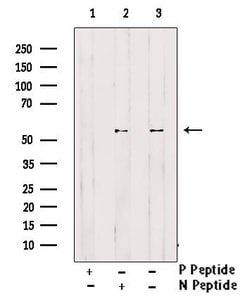
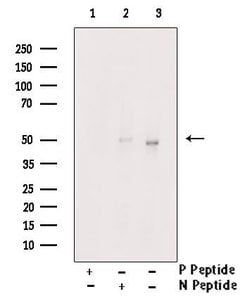
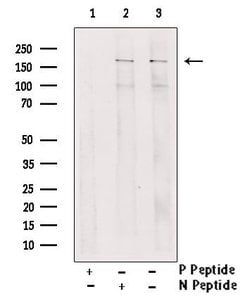
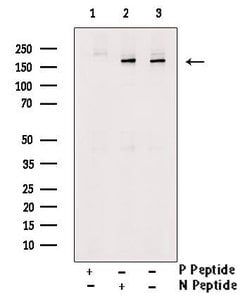
- Antibody detects endogenous levels of OPRK1 only when phosphorylated at Tyr369
- This gene encodes an opioid receptor, which is a member of the 7 transmembrane-spanning G protein-coupled receptor family
- It functions as a receptor for endogenous ligands, as well as a receptor for various synthetic opioids
- Ligand binding results in inhibition of adenylate cyclase activity and neurotransmitter release
- This opioid receptor plays a role in the perception of pain and mediating the hypolocomotor, analgesic and aversive actions of synthetic opioids
- Variations in this gene have also been associated with alcohol dependence and opiate addiction
- Alternatively spliced transcript variants encoding different isoforms have been found for this gene
- A recent study provided evidence for translational readthrough in this gene, and expression of an additional C-terminally extended isoform via the use of an alternative in-frame translation termination codon.