Phospho-PAR1 (Tyr420) Polyclonal Antibody, Invitrogen™
Manufacturer: Thermo Scientific
Select a Size
| Pack Size | SKU | Availability | Price |
|---|---|---|---|
| Each of 1 | PIPA5105095-Each-of-1 | In Stock | ₹ 45,434.50 |
PIPA5105095 - Each of 1
In Stock
Quantity
1
Base Price: ₹ 45,434.50
GST (18%): ₹ 8,178.21
Total Price: ₹ 53,612.71
Antigen
Phospho-PAR1 (Tyr420)
Classification
Polyclonal
Conjugate
Unconjugated
Gene
F2R
Gene Alias
AI482343; C HTR; Cf2r; coagulation factor II (thrombin) receptor; coagulation factor II receptor; coagulation factor II thrombin receptor; F2R; HTR; PAR1; PAR-1; protease activated receptor 1; protease-activated receptor 1; proteinase-activated receptor 1; Thrombin receptor; ThrR; TR; TRGPC
Host Species
Rabbit
Purification Method
sequential chromatography
Regulatory Status
RUO
Gene ID (Entrez)
14062, 2149, 25439
Content And Storage
-20°C
Form
Liquid
Applications
Western Blot
Concentration
1 mg/mL
Formulation
PBS with 50% glycerol and 0.02% sodium azide; pH 7.4
Gene Accession No.
P25116, P26824, P30558
Gene Symbols
F2R
Immunogen
A synthesized peptide derived from human F2R(Accession P25116), corresponding to amino acid residues around phosphorylated Tyr420.
Quantity
100 μL
Primary or Secondary
Primary
Target Species
Human, Mouse, Rat
Product Type
Antibody
Isotype
IgG
Related Products
Description
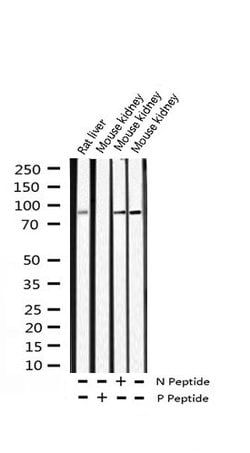
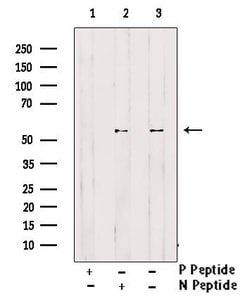
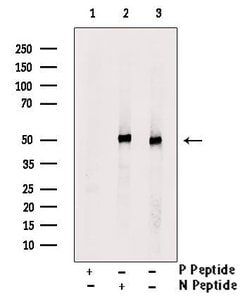
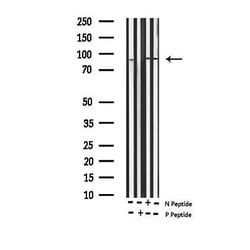
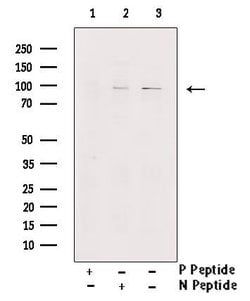
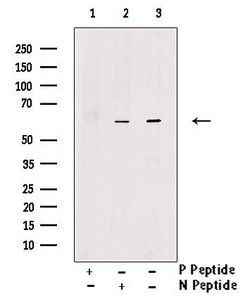
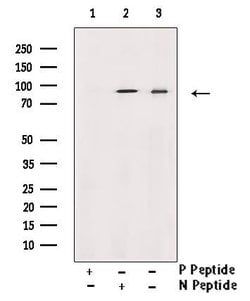
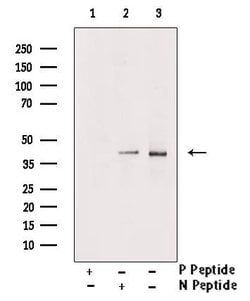
- Antibody detects endogenous levels of Thrombin Receptor only when phosphorylated at Tyr420
- Thrombin is a serine protease that is involved in platelet aggregation and blood coagulation
- It is cleaved from its precursor, prothrombin, and converts fibrinogen to fibrin in the final step of the clotting cascade
- Thrombin mediates its regulatory effects by activating cell surface G-protein coupled receptors which include PAR-1, PAR-2 and PAR3.