Aquaporin 0 Polyclonal Antibody, Invitrogen™
Manufacturer: Thermo Scientific
Select a Size
| Pack Size | SKU | Availability | Price |
|---|---|---|---|
| Each of 1 | PIPA5105269-Each-of-1 | In Stock | ₹ 46,502.50 |
PIPA5105269 - Each of 1
In Stock
Quantity
1
Base Price: ₹ 46,502.50
GST (18%): ₹ 8,370.45
Total Price: ₹ 54,872.95
Antigen
Aquaporin 0
Classification
Polyclonal
Conjugate
Unconjugated
Gene
MIP
Gene Alias
AQP0; aquaporin 0; Aquaporin0; aquaporin-0; Cat; CTRCT15; dominant cataract; Hfi; hydropic fibers; lens fiber major intrinsic protein; lens opacity; LIM1; Lop; major intrinsic protein of eye lens fiber; major intrinsic protein of lens fiber; MIP; MIP26; MP26; Palm; shrivelled; Svl
Host Species
Rabbit
Purification Method
Affinity chromatography
Regulatory Status
RUO
Gene ID (Entrez)
17339, 25480, 4284
Content And Storage
-20°C
Form
Liquid
Applications
Immunocytochemistry, Immunohistochemistry (Paraffin), Western Blot
Concentration
1 mg/mL
Formulation
PBS with 50% glycerol and 0.02% sodium azide; pH 7.4
Gene Accession No.
P09011, P30301, P51180
Gene Symbols
MIP
Immunogen
A synthesized peptide derived from human MIP(Accession P30301), corresponding to amino acid residues V125-G175.
Quantity
100 μL
Primary or Secondary
Primary
Target Species
Human, Mouse, Rat
Product Type
Antibody
Isotype
IgG
Related Products
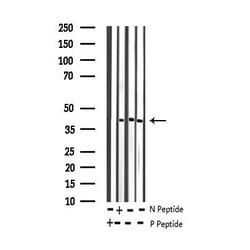
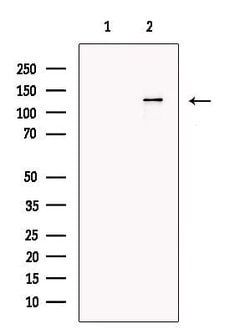
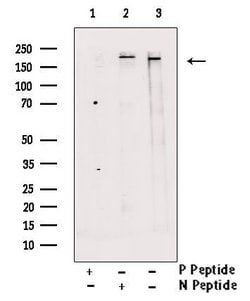
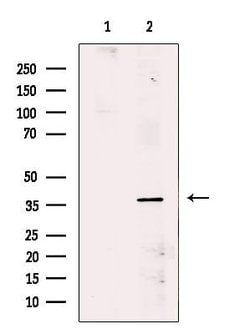
Description
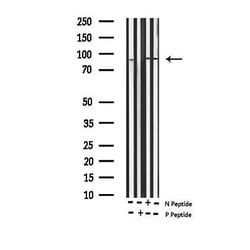
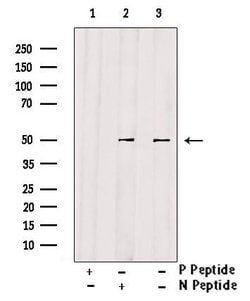
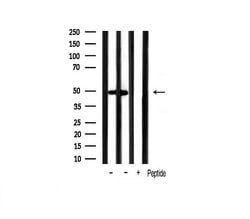
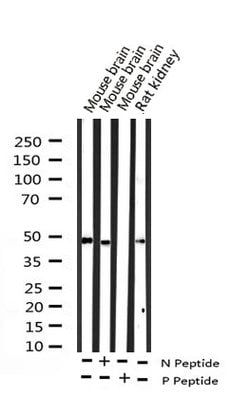
- Antibody detects endogenous levels of total AQP0
- AQP0 is the most abundant endogenous protein in the plasma membrane of lens fiber cells where it functions not only as a water pore, but it is also involved in fiber-fiber adhesion and is crucial for fiber cell structure and organization
- AQP0 contains an additional pore constriction, not seen in any other aquaporin structures, which may be responsible for pore gating
- The closed AQP0 pore holds just three water molecules, which are spaced too far apart to form hydrogen bonds with each other
- The C-terminal domain of AQP0 undergoes extensive post-translational modification, including many truncations, during lens aging due to the actions of m-calpain, proteases or non-enzymatic mechanisms
- These truncation sites may be involved in the development of cataracts.