Caspase 4 Precursor (Cleaved Gln81) Polyclonal Antibody, Invitrogen™
Manufacturer: Thermo Scientific
Select a Size
| Pack Size | SKU | Availability | Price |
|---|---|---|---|
| Each of 1 | PIPA5105280-Each-of-1 | In Stock | ₹ 41,607.50 |
PIPA5105280 - Each of 1
In Stock
Quantity
1
Base Price: ₹ 41,607.50
GST (18%): ₹ 7,489.35
Total Price: ₹ 49,096.85
Antigen
Caspase 4 Precursor (Cleaved Gln81)
Classification
Polyclonal
Conjugate
Unconjugated
Gene
CASP4
Gene Alias
apoptotic cysteine protease Mih1/TX; CASP4; CASP-4; caspase 4; caspase 4, apoptosis-related cysteine peptidase; caspase 4, apoptosis-related cysteine protease; caspase-4; Caspase-4 subunit 1; Caspase-4 subunit 2; ICE and Ced-3 homolog 2; ICE(rel)II; ICE(rel)-II; ICEREL-II; ICH2; ICH-2; Mih1; Mih1/TX; protease ICH-2; protease TX; TX
Host Species
Rabbit
Purification Method
Affinity chromatography
Regulatory Status
RUO
Gene ID (Entrez)
837
Content And Storage
-20°C
Form
Liquid
Applications
Immunohistochemistry (Paraffin), Western Blot
Concentration
1 mg/mL
Formulation
PBS with 50% glycerol and 0.02% sodium azide; pH 7.4
Gene Accession No.
P49662
Gene Symbols
CASP4
Immunogen
A synthesized peptide derived from human CASP4(Accession P49662), corresponding to amino acid residues L73-P96.
Quantity
100 μL
Primary or Secondary
Primary
Target Species
Human
Product Type
Antibody
Isotype
IgG
Related Products
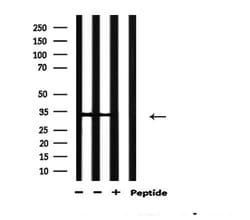
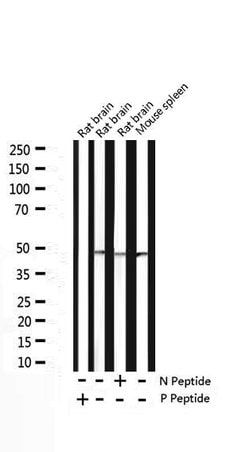
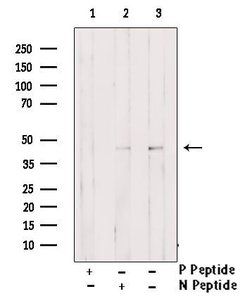
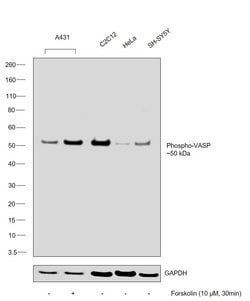
Description
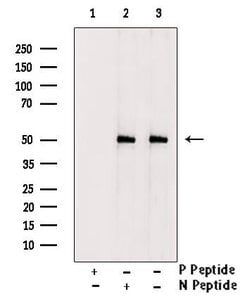
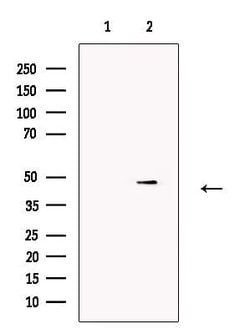
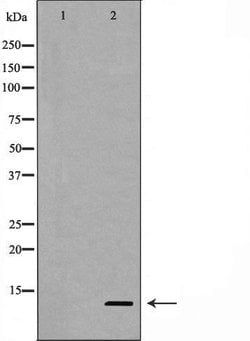
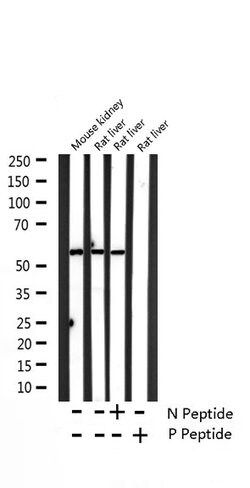
- Antibody detects endogenous levels of fragment of activated Caspase4 resulting from cleavage adjacent to Gln81
- Caspases are cysteine proteases, expressed as inactive precursors, that mediate apoptosis by proteolysis of specific substrates
- Caspases have the ability to cleave after aspartic acid residues
- There are two classes of caspases involved in apoptosis; initiators (activation by receptor cluster) and effectors (activation by mitochondrial permeability transition)
- Proapoptotic signals autocatalytically activate initiator caspases, such as Caspase-8 and Caspase 9
- Activated initiator caspases then process effector caspases, such as Caspase-3 and Caspase-7, which in turn cause cell collapse.