Phospho-Caspase 2 Precursor (Ser340) Polyclonal Antibody, Invitrogen™
Manufacturer: Thermo Scientific
Select a Size
| Pack Size | SKU | Availability | Price |
|---|---|---|---|
| Each of 1 | PIPA5105353-Each-of-1 | In Stock | ₹ 41,607.50 |
PIPA5105353 - Each of 1
In Stock
Quantity
1
Base Price: ₹ 41,607.50
GST (18%): ₹ 7,489.35
Total Price: ₹ 49,096.85
Antigen
Phospho-Caspase 2 Precursor (Ser340)
Classification
Polyclonal
Conjugate
Unconjugated
Gene
CASP2
Gene Alias
CASP2; CASP-2; caspase 2; caspase 2 apoptosis-related cysteine peptidase; caspase-2; Caspase-2 subunit p12; Caspase-2 subunit p13; Caspase-2 subunit p18; Ich1; ICH-1; ICH-1 protease; ICH-1L; ICH-1L/1S; Nedd2; NEDD-2; Neural precursor cell expressed developmentally down-regulated protein 2; PPP1R57; Protease ICH-1; protein phosphatase 1, regulatory subunit 57
Host Species
Rabbit
Purification Method
sequential chromatography
Regulatory Status
RUO
Gene ID (Entrez)
12366, 64314, 835
Content And Storage
-20°C
Form
Liquid
Applications
Immunocytochemistry, Western Blot
Concentration
1 mg/mL
Formulation
PBS with 50% glycerol and 0.02% sodium azide; pH 7.4
Gene Accession No.
P29594, P42575, P55215
Gene Symbols
CASP2
Immunogen
A synthesized peptide derived from human CASP2(Accession P42575), corresponding to amino acid residues around phosphorylated Ser340.
Quantity
100 μL
Primary or Secondary
Primary
Target Species
Human, Mouse, Rat
Product Type
Antibody
Isotype
IgG
Related Products
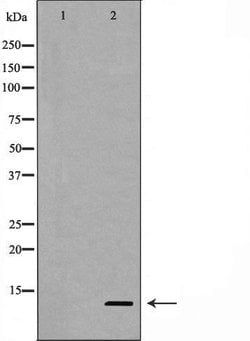
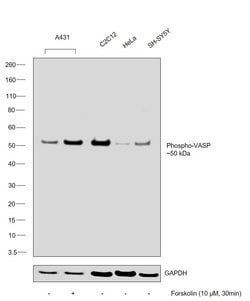
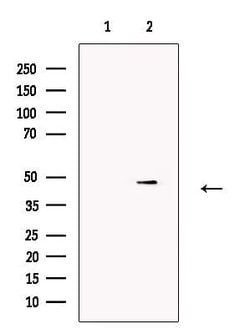
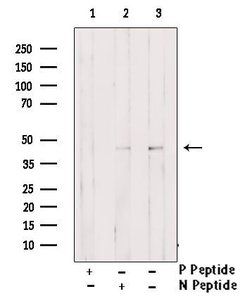
Description
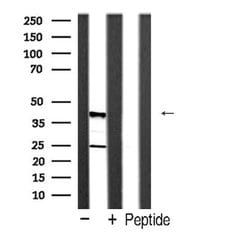
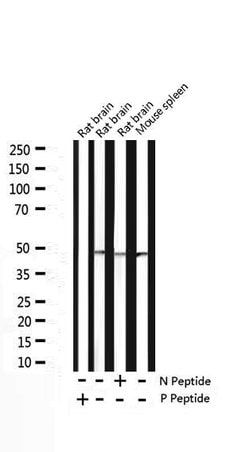
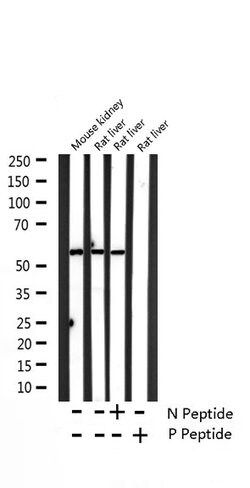
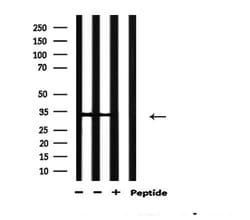
- Antibody detects endogenous levels of Caspase 2 only when phosphorylated at Ser340
- Caspases are cysteine proteases, expressed as inactive precursors, that mediate apoptosis by proteolysis of specific substrates
- Caspases have the ability to cleave after aspartic acid residues
- There are two classes of caspases involved in apoptosis; initiators (activation by receptor cluster) and effectors (activation by mitochondrial permeability transition)
- Proapoptotic signals autocatalytically activate initiator caspases, such as Caspase-8 and Caspase 9
- Activated initiator caspases then process effector caspases, such as Caspase-3 and Caspase-7, which in turn cause cell collapse.