EphA5 Polyclonal Antibody, Invitrogen™
Manufacturer: Thermo Scientific
Select a Size
| Pack Size | SKU | Availability | Price |
|---|---|---|---|
| Each of 1 | PIPA5112413-Each-of-1 | In Stock | ₹ 42,853.50 |
PIPA5112413 - Each of 1
In Stock
Quantity
1
Base Price: ₹ 42,853.50
GST (18%): ₹ 7,713.63
Total Price: ₹ 50,567.13
Antigen
EphA5
Classification
Polyclonal
Conjugate
Unconjugated
Gene
EPHA5
Gene Alias
AI854630; ARCC2; AW125296; brain-specific kinase; BSK; CEK7; CEK-7; CTPA; CTPP1; ECK; eck-like sequence 1; EHK1; EHK-1; EK7; Ekh1; Els1; Els1.; epa5; EPH homology kinase 1; Eph receptor A5; EPHA5; EPH-like kinase 7; Ephrin A2; Ephrin A5; Ephrin type-A receptor 5; EphrinA2; EphrinA5; HEK7; receptor protein-tyrosine kinase HEK7; Rek7; TYRO4; tyrosine-protein kinase receptor EHK-1
Host Species
Rabbit
Purification Method
Protein G
Regulatory Status
RUO
Gene ID (Entrez)
2044
Content And Storage
-20°C or -80°C if preferred
Form
Liquid
Applications
ELISA, Immunocytochemistry, Immunohistochemistry (Paraffin), Western Blot
Concentration
3.5 mg/mL
Formulation
PBS with 50% glycerol and 0.03% ProClin 300; pH 7.4
Gene Accession No.
P54756
Gene Symbols
EPHA5
Immunogen
Recombinant Human Ephrin type-A receptor 5 protein (246-514AA)
Quantity
100 μg
Primary or Secondary
Primary
Target Species
Human
Product Type
Antibody
Isotype
IgG
Related Products
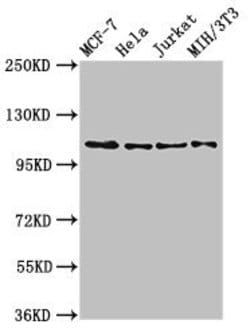
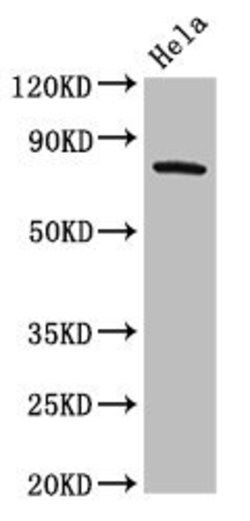
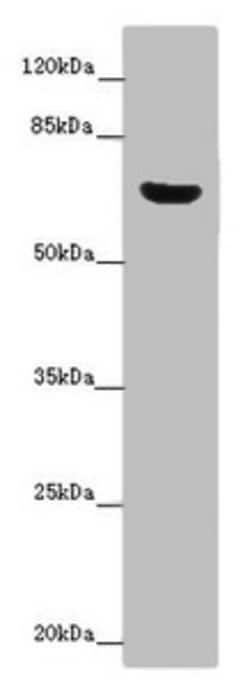
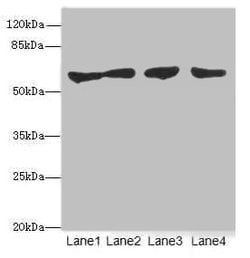
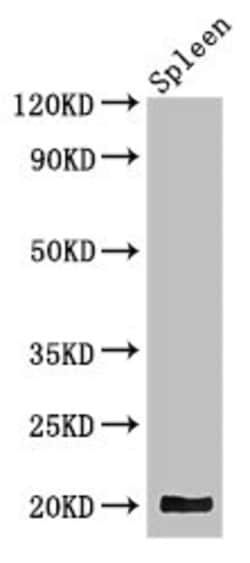
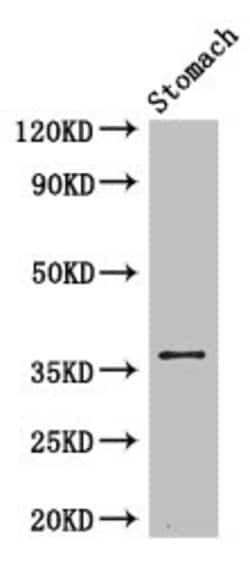

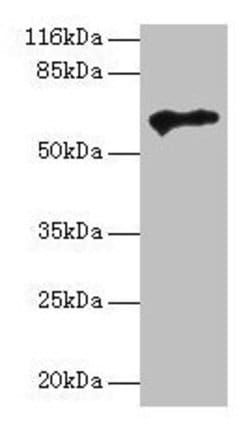
Description
- EPHA5 belongs to the ephrin receptor subfamily of the protein tyrosine kinase family
- EPH and EPH-related receptors have been implicated in mediated developmental events, particularly in the nervous system
- Protein kinases are enzymes that transfer a phosphate group from a phosphate donor, generally the g phosphate of ATP, onto an acceptor amino acid in a substrate protein
- By this basic mechanism, protein kinases mediate most of the signal transduction in eukaryotic cells, regulating cellular metabolism, transcription, cell cycle progression, cytoskeletal rearrangement and cell movement, apoptosis, and differentiation
- The tyrosine kinase (TK) group is mainly involved in the regulation of cell-cell interactions such as differentiation, adhesion, motility and death
- There are currently about 90 TK genes sequenced, 58 are of receptor protein TK (e
- g
- EGFR, EPH, FGFR, PDGFR, TRK, and VEGFR families), and 32 of cytosolic TK (e
- g
- ABL, FAK, JAK, and SRC families).