EphB3 Polyclonal Antibody, Invitrogen™
Manufacturer: Thermo Scientific
Select a Size
| Pack Size | SKU | Availability | Price |
|---|---|---|---|
| Each of 1 | PIPA5112414-Each-of-1 | In Stock | ₹ 43,120.50 |
PIPA5112414 - Each of 1
In Stock
Quantity
1
Base Price: ₹ 43,120.50
GST (18%): ₹ 7,761.69
Total Price: ₹ 50,882.19
Antigen
EphB3
Classification
Polyclonal
Conjugate
Unconjugated
Gene
EPHB3
Gene Alias
AW456895; Cek10; Developmental kinase 5; EK2; Embryonic kinase 2; EPH receptor B3; EPHB3; EPH-like kinase 2; EPH-like tyrosine kinase 2; EPH-like tyrosine kinase-2; Ephrin type-B receptor 3; Etk2; HEK2; human embryo kinase 2; Mdk5; mDK-5; Sek4; TYRO6; tyrosine-protein kinase receptor SEK-4; Tyrosine-protein kinase TYRO6
Host Species
Rabbit
Purification Method
Protein G
Regulatory Status
RUO
Gene ID (Entrez)
13845, 2049, 287989
Content And Storage
-20°C or -80°C if preferred
Form
Liquid
Applications
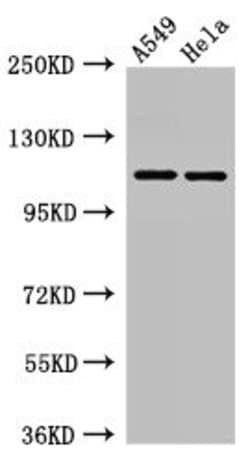
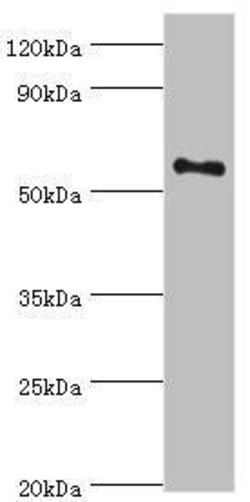
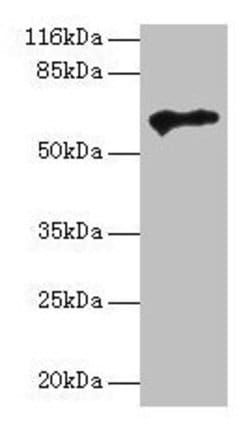
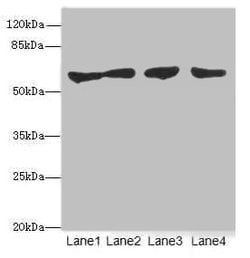
ELISA, Immunocytochemistry, Western Blot
Concentration
2.89 mg/mL
Formulation
PBS with 50% glycerol and 0.03% ProClin 300; pH 7.4
Gene Accession No.
P54753, P54754
Gene Symbols
EPHB3
Immunogen
Recombinant Human Ephrin type-B receptor 3 protein (261-390AA)
Quantity
100 μg
Primary or Secondary
Primary
Target Species
Human, Mouse, Rat
Product Type
Antibody
Isotype
IgG
Related Products
Description
- EPHB3 is a receptor tyrosine kinase that belongs to the ephrin receptor family
- Members of the Eph family of kinases play important roles in diverse biological processes including nervous system development, angiogenesis and neural synapsis formation and maturation
- The ephrin ligands and Eph receptors display reciprocal expression in vivo
- Developing and adult neural tissue express nearly all of the Eph receptors and ephrin ligands
- Ephs and ephrins play a significant role in angiogenesis.