PIPA520497
HAPLN2 Polyclonal Antibody, Invitrogen™
Manufacturer: Thermo Scientific
Select a Size
| Pack Size | SKU | Availability | Price |
|---|---|---|---|
| Each of 1 | PIPA520497-Each-of-1 | In Stock | ₹ 46,057.50 |
PIPA520497 - Each of 1
In Stock
Quantity
1
Base Price: ₹ 46,057.50
GST (18%): ₹ 8,290.35
Total Price: ₹ 54,347.85
Antigen
HAPLN2
Classification
Polyclonal
Conjugate
Unconjugated
Gene
HAPLN2
Gene Alias
4930401E20Rik; Brain link protein 1; brain link protein-1; Bral1; HAPLN2; Hyaluronan and proteoglycan link protein 2; RP11-284F21.6
Host Species
Rabbit
Purification Method
Antigen affinity chromatography
Regulatory Status
RUO
Gene ID (Entrez)
60484, 64057, 73940
Content And Storage
Maintain refrigerated at 2-8°C for up to 3 months. For long term storage store at -20°C
Form
Liquid
Applications
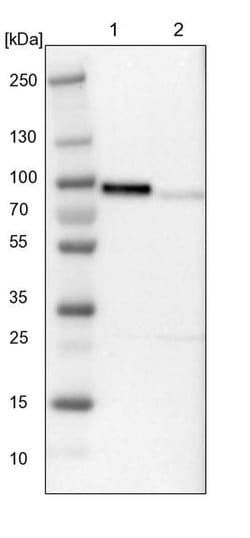
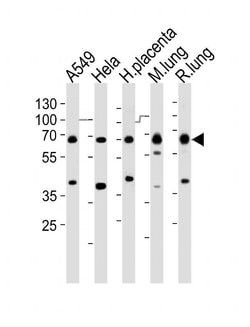
Immunohistochemistry, Western Blot
Concentration
1 mg/mL
Formulation
PBS with 0.02% sodium azide
Gene Accession No.
Q9ESM2, Q9ESM3, Q9GZV7
Gene Symbols
HAPLN2
Immunogen
a 12 amino acid peptide from near the center of human BRAL1.
Quantity
100 μg
Primary or Secondary
Primary
Target Species
Human, Mouse, Rat
Product Type
Antibody
Isotype
IgG
Related Products


Description
- A suggested positive control is human brain tissue lysate
- PA5-20497 can be used with blocking peptide PEP-0617
- BRAL1 is a member a superfamily consisting of several highly homologous hyaluronan and proteoglycan binding link proteins
- BRAL1 is predominantly expressed in brain tissue and spinal cord
- Like other members in the link-module superfamily, BRAL1 contains an immunoglobulin-like fold and two proteoglycan tandem repeats (PTRs)
- Its mRNA expression pattern is similar to other lectican proteoglycans, suggesting that BRAL1 may act to stabilize the binding between the extracellular matrix molecule hyaluronan and brevican
- Immunostaining of mouse brain showed BRAL1 expression at P20 in the white matter of the developing cerebellum and in myelinated fiber tracts in the adult brain, suggesting that expression starts when axonal myelination occurs.