01-676-123
LIME Monoclonal Antibody (LIME-10), Invitrogen™
Manufacturer: Thermo Scientific
Select a Size
| Pack Size | SKU | Availability | Price |
|---|---|---|---|
| Each of 1 | 01-676-123-Each-of-1 | In Stock | ₹ 41,385.00 |
01-676-123 - Each of 1
In Stock
Quantity
1
Base Price: ₹ 41,385.00
GST (18%): ₹ 7,449.30
Total Price: ₹ 48,834.30
Antigen
LIME
Classification
Monoclonal
Concentration
1 mg/mL
Formulation
PBS with 15mM sodium azide; pH 7.4
Gene Accession No.
Q9H400
Gene Symbols
Lime1
Immunogen
COOH-terminal peptide comprising residues 281-296 of the human LIME conjugated to keyhole limpet hemocyanin
Quantity
100 μg
Primary or Secondary
Primary
Target Species
Human
Product Type
Antibody
Isotype
IgG2a
Applications
Immunohistochemistry (Paraffin), Western Blot
Clone
LIME-10
Conjugate
Unconjugated
Gene
Lime1
Gene Alias
2810038K19Rik; dJ583P15.4; FLJ20406; Lck interacting transmembrane adaptor 1; lck-interacting membrane protein; Lck-interacting molecule; lck-interacting transmembrane adapter 1; Lime; lime 1; LIME1; LP8067; RP4-583P15.5
Host Species
Mouse
Purification Method
Protein A
Regulatory Status
RUO
Gene ID (Entrez)
54923
Content And Storage
4° C, do not freeze
Form
Liquid
Related Products




Description
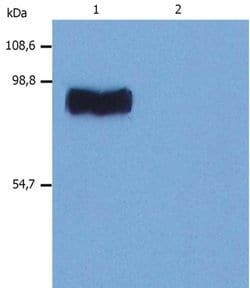
- Western blotting: Reducing conditions
- LIME (Lck-interacting molecule) is a 30 kDa double-palmitoylated protein with unusually basic cytoplasmic domain, expressed by T cells
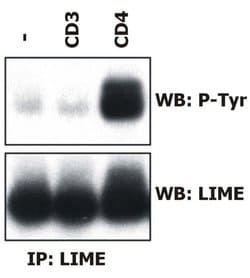
- After ligation of CD4 or CD8 T cell coreceptors, LIME is phosphorylated by Src-family kinases and associates with Lck and Fyn kinases and with their negative regulator Csk
- Interestingly, Csk-mediated phosphorylation of C-terminal negative-regulatory tyrosine of LIME-associated Lck can result in increase of enzymatic activity compared with the total pool of Lck, thus, LIME serves as a positive regulator of TCR-dependent T cell signaling
- However, under some circumstances, LIME may mediate inhibitory signals.