7143979
ATM Polyclonal Antibody, Bethyl Laboratories
Rabbit Polyclonal Antibody
Manufacturer: Fischer Scientific
The price for this product is unavailable. Please request a quote
Antigen
ATM
Classification
Polyclonal
Form
Liquid
Regulatory Status
RUO
Formulation
TBS with 0.1% BSA and 0.09% sodium azide
Gene Alias
Serine-protein kinase ATM, EC 2.7.1.37, Ataxia telangiectasia mutated
Gene Symbols
ATM
Isotype
IgG
Purification Method
Antigen affinity chromatography
Product Type
Antibody
Applications
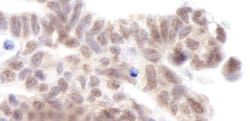
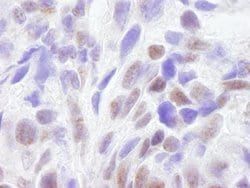
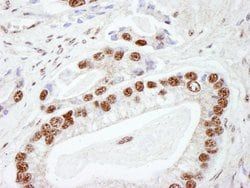
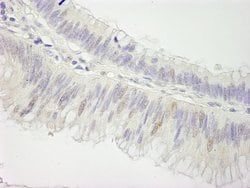
Immunohistochemistry
Conjugate
Unconjugated
Host Species
Rabbit
Target Species
Human
Gene Accession No.
Q13315
Gene ID (Entrez)
472
Immunogen
Between 2550 and 2600
Primary or Secondary
Primary
Content And Storage
4° C
Gene
ATM
Related Products
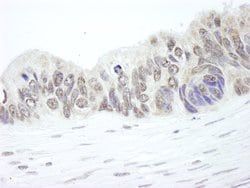
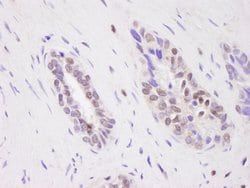
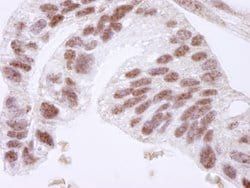
Description
- The recommended shelf life for this product is 1 year from date of receipt
- Based on 100% sequence identity, this antibody is predicted to react with Chimpanzee Ataxia-telangiectasia Mutated (ATM) is a protein that belongs to the PI3/PI4 kinase family
- Ataxia-telangiectasia is a rare autosomal recessive disorder characterized by progressive neurologic degeneration, immunologic deficiency, and an increased risk of lymphoid cancer
- The ATM gene codes for a protein belonging to the phosphoinositide 3-kinase (PI3K) superfamily
- ATM phosphorylates proteins instead of lipid and has many downstream targets that act as cell-cycle regulators including: P53, Mdm2, BRCA1, and SMC1
- The ATM protein is responsible for repairing double-stranded DNA breaks that occur because of ionizing radiation and other mutagens
- The ATM's C-terminal region has extensive homology to the catalytic domains of phosphatidylinositol 3-kinases (PI3 kinases)
- Studies have shown that ATM becomes autophosphorylated and upregulated by exposure to ionizing radiation
- AT cells are hypersensitive to ionizing radiation, impaired in mediating the inhibition of DNA synthesis and display delays in p53 induction
- Further, DNA damage caused by ionizing irradiation activates ATM-kinase, leading to a cascade of kinase reactions that regulate cell cycle, apoptosis, and DNA damage repair
- Studies have linked ATM to apoptosis along with Nbs1 and Chk2 in the E2F1 pathway.