89-126-708
AR (phospho S213), Rabbit anti-Human, Polyclonal Antibody, Abnova™
Manufacturer: Abnova Corporation
Select a Size
| Pack Size | SKU | Availability | Price |
|---|---|---|---|
| Each of 1 | 89-126-708-Each-of-1 | In Stock | ₹ 87,220.00 |
89-126-708 - Each of 1
In Stock
Quantity
1
Base Price: ₹ 87,220.00
GST (18%): ₹ 15,699.60
Total Price: ₹ 1,02,919.60
Antigen
AR
Classification
Polyclonal
Conjugate
Unconjugated
Dilution
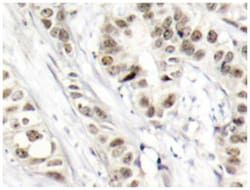
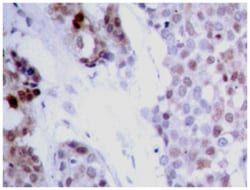
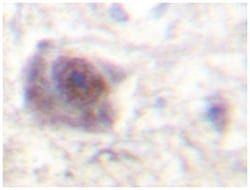
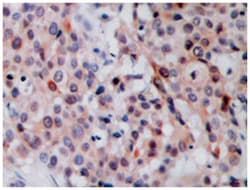
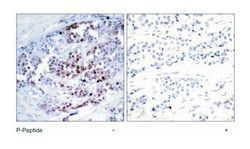
Immunohistochemistry (1:50-1:200) The optimal working dilution should be determined by the end user.
Gene
AR
Gene Symbols
AR
Immunogen
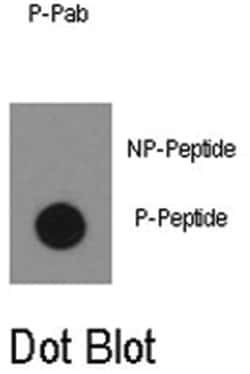
Synthetic phosphopeptide corresponding to residues surrounding S213 of AR.
Quantity
100 μL
Primary or Secondary
Primary
Target Species
Human
Form
Liquid
Applications
Immunohistochemistry (PFA fixed)
Concentration
1 mg/mL
Description
Rabbit polyclonal antibody raised against synthetic phosphopeptide of AR.
Formulation
In PBS, pH 7.2 (0.05% sodium azide)
Gene Alias
AIS/DHTR/HUMARA/KD/NR3C4/SBMA/SMAX1/TFM
Host Species
Rabbit
Purification Method
Antigen affinity purification
Regulatory Status
RUO
Gene ID (Entrez)
367
Content And Storage
Store at 4°C. For long term storage store at -20°C.Aliquot to avoid repeated freezing and thawing.
Related Products
Description
- The androgen receptor gene is more than 90kb long and codes for a protein that has 3 major functional domains: the N-terminal domain, DNA-binding domain, and androgen-binding domain
- The protein functions as a steroid-hormone activated transcription factor
- Upon binding the hormone ligand, the receptor dissociates from accessory proteins, translocates into the nucleus, dimerizes, and then stimulates transcription of androgen responsive genes
- This gene contains 2 polymorphic trinucleotide repeat segments that encode polyglutamine and polyglycine tracts in the N-terminal transactivation domain of its protein
- Expansion of the polyglutamine tract causes spinal bulbar muscular atrophy (Kennedy disease)
- Mutations in this gene are also associated with complete androgen insensitivity (CAIS)
- Two alternatively spliced variants encoding distinct isoforms have been described
- [provided by RefSeq