MA170045
TCR beta Monoclonal Antibody (H57-597), Invitrogen™
Manufacturer: Thermo Scientific
Select a Size
| Pack Size | SKU | Availability | Price |
|---|---|---|---|
| Each of 1 | MA170045-Each-of-1 | In Stock | ₹ 39,872.00 |
MA170045 - Each of 1
In Stock
Quantity
1
Base Price: ₹ 39,872.00
GST (18%): ₹ 7,176.96
Total Price: ₹ 47,048.96
Antigen
TCR beta
Classification
Monoclonal
Concentration
1 mg/mL
Formulation
PBS with 0.02% sodium azide
Gene Accession No.
0
Gene Symbols
Tcrb
Immunogen
Affinity purified D0 -11.10 TCR.
Quantity
250 μg
Primary or Secondary
Primary
Target Species
Mouse
Product Type
Antibody
Isotype
IgG
Applications
Flow Cytometry, Immunohistochemistry (Frozen), Immunoprecipitation, Western Blot
Clone
H57-597
Conjugate
Unconjugated
Gene
Tcrb
Gene Alias
bTCR; FLJ22602; MGC117436; MGC22624; MGC23964; MGC71411; T cell receptor beta chain; t-cell antigen receptor; T-cell receptor; TCR beta; Tcra; Tcrb; TCRbeta; TCRD; Tib; TRA
Host Species
Armenian Hamster
Purification Method
Protein G
Regulatory Status
RUO
Gene ID (Entrez)
21577
Content And Storage
Store at 4°C short term. For long term storage, store at -20°C, avoiding freeze/thaw cycles.
Form
Liquid
Related Products

Description
- MA1-70045 detects alpha/beta TCR in mouse samples
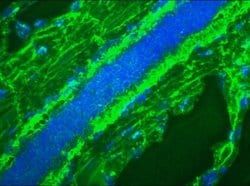
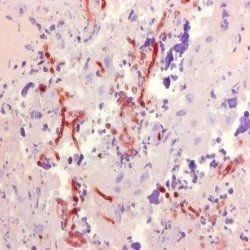
- MA1-70045 has been successfully used in flow cytometry, immunoprecipitation, immunohistochemistry (frozen sections), and Western blot procedures
- The MA1-70045 immunogen is affinity purified D0 -11.10 TCR
- Stable at 4oC
- For long term storage, aliquot and freeze unused portions at -20oC in volumes appropriate for single usage
- Avoid repeated freeze/thaw cycles
- The ability of T cell receptors (TCR) to discriminate foreign from self-peptides presented by major histocompatibility complex (MHC) class II molecules is essential for an effective adaptive immune response
- TCR recognition of self-peptides has been linked to autoimmune disease
- Mutant self-peptides have been associated with tumors
- Engagement of TCRs by a family of bacterial toxins know as superantigens has been responsible for toxic shock syndrome
- Autoantibodies to V beta segments of T cell receptors have been isolated from patients with rheumatoid arthritis (RA) and systemic lupus erythematosus (SLE)
- The autoantibodies block TH1-mediated inflammatory autodestructive reactions and are believed to be a method by which the immune system compensates for disease (ref5)
- T Cell and TCR Diversity Most human T cells express the TCR alpha-beta and either CD4 or CD8 molecule (single positive, SP)
- A small number of T cells lack both CD4 and CD8 (double negative, DN)
- Increased percentages of alpha-beta DN T cells have been identified in some autoimmune and immunodeficiency disorders
- Gamma-delta T cells are primarily found within the epithelium
- They show less TCR diversity and recognize antigens differently than alpha-beta T cells
- Subsets of gamma-delta T cells have shown antitumor and immunoregulatory activity.