MABN2185MI
MilliporeSigma™ LGMN, Mouse, Unlabeled, Clone: 6A7.2,
Manufacturer: MilliporeSigma™
Select a Size
| Pack Size | SKU | Availability | Price |
|---|---|---|---|
| Each of 1 | MABN2185MI-Each-of-1 | In Stock | ₹ 39,338.00 |
MABN2185MI - Each of 1
In Stock
Quantity
1
Base Price: ₹ 39,338.00
GST (18%): ₹ 7,080.84
Total Price: ₹ 46,418.84
Antigen
LGMN
Classification
Monoclonal
Concentration
Please refer to lot specific datasheet.
Formulation
Purified mouse monoclonal antibody IgG2a in buffer containing 0.1M Tris-Glycine (pH 7.4), 150mM NaCl with 0.05% Sodium Azide.
Gene Accession No.
Q99538
Immunogen
GST-tagged recombinant fragment corresponding to 95 amino acids from the internal region of human LGMN.
Quantity
100 μg
Research Discipline
Neuroscience
Gene ID (Entrez)
NP_001008530
Target Species
Human
Form
Purified
Applications
Western Blot
Clone
6A7.2
Conjugate
Unconjugated
Gene
LGMN, PRCS1
Host Species
Mouse
Purification Method
Protein G Purified
Regulatory Status
RUO
Primary or Secondary
Primary
Test Specificity
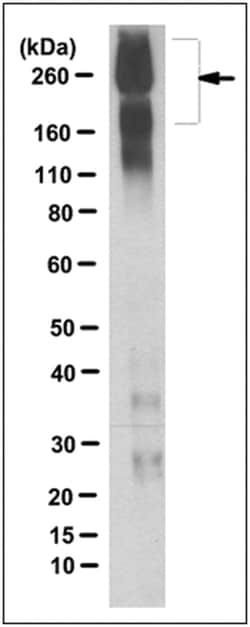
Clone 6A7.2 of detects LGMN in multiple human tissues by Western blotting and immunohistochemistry.
Content And Storage
Stable for 1 year at 2°-8°C from date of receipt.
Isotype
IgG2a κ
Related Products




Description
- Legumain (UniProt: Q99538; EC:3.4.22.34, also known as Asparaginyl endopeptidase; Protease, cysteine 1) is encoded by LGMN (also known as PRSC1) gene (Gene ID 5641) in human
- Legumain is a lysosomal enzyme with strict specificity of the hydrolysis of asparaginyl bonds
- It is shown to be ubiquitously distributed with abundance in kidney, heart, and placenta
- In the zymogen form, the uncleaved propeptide blocks access to the active site
- It is activated autocatlytically by acidic pH and the active form is shown to be monomeric
- Legumain plays a pivotal role in the endosomal/lysosomal degradation system and is involved in the processing of bacterial peptides and endogenous proteins for MHC class II presentation
- Legumain deficiency causes the accumulation of pro-cathepsins B, H and L
- Overexpression of legumain is associated with invasion and metastasis in a majority of solid tumors.