MABN851MI
MilliporeSigma™ anti-CRALBP Clone: 3H9.1,
Manufacturer: MilliporeSigma™
Select a Size
| Pack Size | SKU | Availability | Price |
|---|---|---|---|
| Each of 1 | MABN851MI-Each-of-1 | In Stock | ₹ 40,292.08 |
MABN851MI - Each of 1
In Stock
Quantity
1
Base Price: ₹ 40,292.08
GST (18%): ₹ 7,252.574
Total Price: ₹ 47,544.654
Antigen
CRALBP
Classification
Monoclonal
Conjugate
Unconjugated
Gene Accession No.
P12271
Host Species
Mouse
Purification Method
Protein G purified
Regulatory Status
RUO
Primary or Secondary
Primary
Target Species
Mouse
Form
Purified
Applications
Western Blot
Clone
3H9.1
Formulation
Purified mouse monoclonal IgG1κ in buffer containing 0.1M Tris-Glycine (pH 7.4), 150mM NaCl with 0.05% sodium azide.
Gene Symbols
RLBP1, CRALBP
Immunogen
GST-tagged recombinant protein corresponding to the N-terminal half of human CRALBP.
Quantity
100 μg
Research Discipline
Neuroscience
Gene ID (Entrez)
NP_000317
Content And Storage
2°C to 8°C for one year from date of shipment
Isotype
IgG1 κ
Related Products



Description
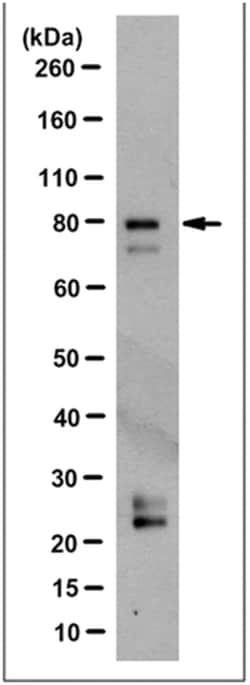
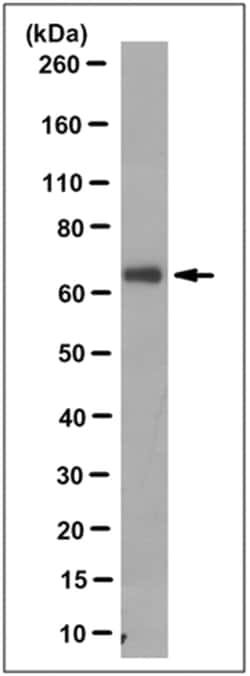
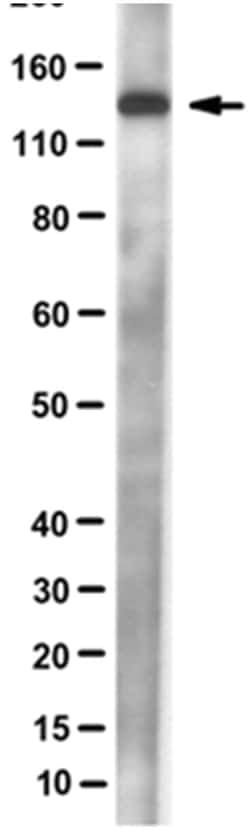
- Specifically detects CRALBP Clone: 3H9.1 in Mouse samples, and it is validated for Western Blotting Retinaldehyde-binding protein 1 (UniProt P12271; also known as Cellular retinaldehyde-binding protein) is encoded by the RLBP1 (also known as CRALBP) gene (Gene ID 6017) in human
- CRALBP is a retinoid-binding protein expressed in retinal pigment epithelial (RPE) cells and Müller glia involved in the retinal visual cycle
- Photoactivation of a visual pigment molecule in vertebrate rod and cone photoreceptors renders the pigment molecule into a bleached all-trans retinal form, which must be exported out of the photoreceptors to be converted back to the light-sensitive 11-cis retinal form in RPE cells (for both rods and cones) or in retinal Müller glia (for cones only)
- The 11-cis chromophore is then imported back into photoreceptors, where it combines with a free opsin to regenerate the visual pigment
- CRALBP is a 36kDa water-soluble protein that facilitates the intracellular transport of hydrophobic 11-cis retinoids
- Mutations in human RLBP1 cause several autosomal recessive retinal diseases, such as retinitis pigmentosa, Bothnia dystrophy, retinitis punctata albescens, fundus albipunctatus, and Newfoundland rod-cone dystrophy
- Likewise, Rlbp1-knockout mice exhibit M-opsin mislocalization, M-cone loss, and impaired cone-driven visual behavior and light responses
- Viral expression of CRALBP in Müller cells, but not RPE cells, is reported to rescue the retinal visual cycle and M-cone sensitivity in Rlbp1-knockout mice.