MilliporeSigma™ CEACAM3/5, Mouse, Unlabeled, Clone: 308/3-3,
Manufacturer: MilliporeSigma™
Select a Size
| Pack Size | SKU | Availability | Price |
|---|---|---|---|
| Each of 1 | MABT326MI-Each-of-1 | In Stock | ₹ 40,292.08 |
MABT326MI - Each of 1
In Stock
Quantity
1
Base Price: ₹ 40,292.08
GST (18%): ₹ 7,252.574
Total Price: ₹ 47,544.654
Antigen
CEACAM3/5
Classification
Monoclonal
Concentration
Please refer to lot specific datasheet.
Formulation
Purified mouse monoclonal IgG1κ in buffer containing 0.1M Tris-Glycine (pH 7.4), 150mM NaCl with 0.05% Sodium Azide.
Gene Accession No.
P40198
Immunogen
Human IgG1 Fc-tagged recombinant human CEACAM3 extracellular domain.
Quantity
100 μg
Research Discipline
Cell Structure
Gene ID (Entrez)
NP_001806
Target Species
Human
Form
Purified
Applications
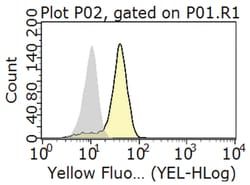
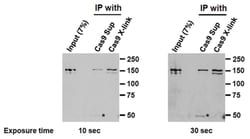
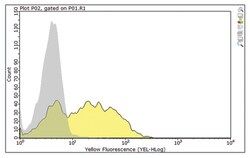
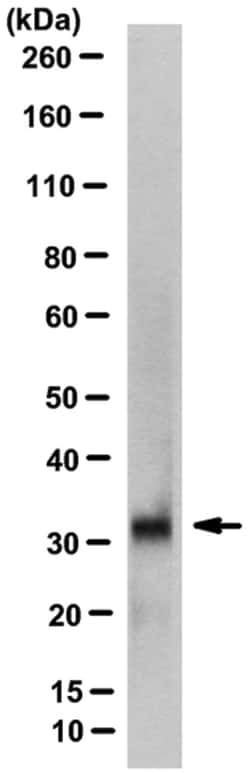
Flow Cytometry, Immunoprecipitation, Western Blot
Clone
308/3-3
Conjugate
Unconjugated
Gene
CEACAM3, CD66D, CGM1, CEACAM5, CEA
Host Species
Mouse
Purification Method
Protein G Purified
Regulatory Status
RUO
Primary or Secondary
Primary
Test Specificity
Clone 308/3-3 reacts with human CEACAM3 and CEACAM5, but not human CEACAM1/4/6/7/8, rat CEACAM1, or mouse CEACAM1 & CEACAM2.
Content And Storage
Stable for 1 year at 2°-8°C from date of receipt.
Isotype
IgG1 κ
Related Products



Description
- Carcinoembryonic antigen-related cell adhesion molecule 3 (UniProt P40198; also known as Carcinoembryonic antigen CGM1, CD66d) is encoded by the CEACAM3 (also known as CD66D, CGM1) gene (Gene ID 1084) in human
- The carcinoembryonic antigen- (CEA-) related cell adhesion molecules (CEACAMs) constitute a 12-member subgroup of the CEA family of immunoglobulin-related proteins first described in 1965 (PMID 4953873)
- CEACAMs are reported to participate in diverse physiological processes, including cell adhesion, differentiation, proliferation, and survival, as well as in carcinogenesis and bacterial pathogenesis
- CEACAM molecules from neighbouring cells can interact via their respective extracellular N-terminal IgV-like domain and mediate cell-to-cell adhesion through trans-oligomerization
- CEACAM molecules within the same cell can also undergo transmembrane domain-mediated cis-oligomerization, an event important for sustaining downstream cellular signaling
- Athough CEACAM1 is shown to utilize its cytoplasmic domain for transducing cellular signaling, not all CEACAM members are expressed with a significant cytoplasmic domain, and others (CEACAM5/6/7/8) are GPI-anchored without even a transmembrane domain
- Human CEACAM3 and CEACAM4 are two CEACAMs whose extracellular region is composed of only one V-type Ig-like extracellular domain (a.a
- 35-142 of CEACAM3)
- Human CEACAM5 (UniProt P06731), on the other hand, is a GPI-anchored CEACAM with the most extracellular Ig domains, 7 in all.