Tyrosine Hydroxylase Polyclonal Antibody, Invitrogen™
Manufacturer: Thermo Scientific
Select a Size
| Pack Size | SKU | Availability | Price |
|---|---|---|---|
| Each of 1 | OPA104050-Each-of-1 | In Stock | ₹ 52,599.00 |
OPA104050 - Each of 1
In Stock
Quantity
1
Base Price: ₹ 52,599.00
GST (18%): ₹ 9,467.82
Total Price: ₹ 62,066.82
Antigen
Tyrosine Hydroxylase
Classification
Polyclonal
Formulation
0.01M HEPES with 0.15M NaCl, 0.1mg/mL BSA, 50% glycerol and no preservative; pH 7.5
Gene Accession No.
P04177, P07101, P24529
Gene Symbols
TH
Immunogen
SDS-denatured, native rat tyrosine hydroxylase purified from pheochromocytoma
Quantity
100 μL
Primary or Secondary
Primary
Target Species
Human, Multi-species, Mouse, Rat
Product Type
Antibody
Isotype
IgG
Applications
Immunocytochemistry, Immunohistochemistry, Immunohistochemistry (Frozen), Western Blot
Conjugate
Unconjugated
Gene
TH
Gene Alias
dystonia 14; DYT14; DYT5b; EC 1.14.16.2; HGNC:11782; Th; TH isoform 3; TH isoform a; th1; TH-4; The; TY3H; TYH; TYH antibody; Tyrosine 3-hydroxylase; tyrosine 3-monooxygenase; tyrosine hydroxylase
Host Species
Rabbit
Purification Method
Affinity chromatography
Regulatory Status
RUO
Gene ID (Entrez)
21823, 25085, 7054
Content And Storage
-20° C, Avoid Freeze/Thaw Cycles
Form
Liquid
Related Products



Description
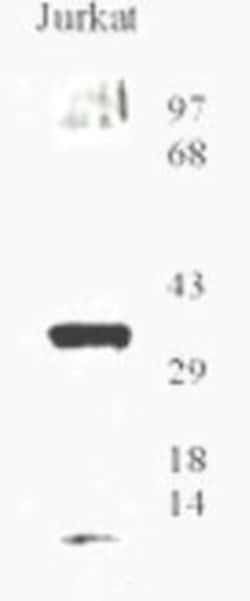
- In Western blot, this antibody detects a single ∽60 kDa protein representing tyrosine hydroxylase from rat brain lysates of PC-12 cells stimulated by okadaic acid
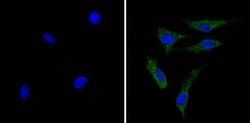
- Immunohistochemical staining of TH in human brain with OPA1-04050 results in intense labeling of the dopaminergic neurons in the substantia nigra
- Store at -20oC short term, 80oC long term
- Tyrosine hydroxylase (TH) is an enzyme involved in the synthesis of catecholamine neurotransmitters dopamine, epinephrine, and norepinephrine
- In all species, catecholamine synthesis is regulated by the interaction of TH with a cofactor, tetrahydrobiopterin (BH4)
- BH4 binds to the TH catalytic domain, resulting in enzymatic activity
- Unlike TH in non-primate species, four human TH mRNA splice variants (hTH1-hTH4) have been isolated
- These variants are identical in their catalytic domain, but differ in their N-terminal, regulatory domains
- TH is also responsible for the conversion of L-tyrosine to L-dopa
- TH plays a key role in the physiology of adrenergic neurons
- The role of TH in the synthesis of catecholamine neurotransmitters suggests a correlation between the enzyme and a number of neuropathogenic diseases including: Parkinson's disease, schizophrenia, Segawa syndrome, and dystonia, as well as a variety of cardiovascular diseases.