PIMA513756
INSR alpha Monoclonal Antibody (83-14), Biotin, Invitrogen™
Manufacturer: Thermo Scientific
Select a Size
| Pack Size | SKU | Availability | Price |
|---|---|---|---|
| Each of 1 | PIMA513756-Each-of-1 | In Stock | ₹ 49,884.50 |
PIMA513756 - Each of 1
In Stock
Quantity
1
Base Price: ₹ 49,884.50
GST (18%): ₹ 8,979.21
Total Price: ₹ 58,863.71
Antigen
INSR alpha
Classification
Monoclonal
Concentration
0.2 mg/mL
Formulation
PBS with 0.2% BSA and 0.09% sodium azide; pH 7.4
Gene Accession No.
P06213
Gene Symbols
INSR
Immunogen
IM-9 lymphocytes followed by purified insulin receptor
Quantity
500 μL
Primary or Secondary
Primary
Target Species
Human
Product Type
Antibody
Isotype
IgG2a κ
Applications
ELISA, Immunocytochemistry, Immunoprecipitation
Clone
83-14
Conjugate
Biotin
Gene
INSR
Gene Alias
4932439J01Rik; CD220; CD220 beta; D630014A15Rik; DAF-2; HHF5; INSR; insulin receptor; insulin receptor (INSR); insulin receptor precursor; insulin receptor preproprotein; Insulin receptor subunit alpha; Insulin receptor subunit beta; IR; IR alpha; IR beta; ir-A; IR-B
Host Species
Mouse
Purification Method
Protein A
Regulatory Status
RUO
Gene ID (Entrez)
3643
Content And Storage
4° C
Form
Liquid
Related Products



Description
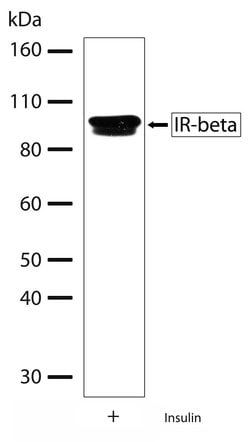
- MA5-13756 targets Insulin Receptor alpha in WB, ICC/IF, ELISA and IP applications and shows reactivity with Human samples
- The MA5-13756 immunogen is iM-9 lymphocytes followed by purified insulin receptor
- Biological actions of insulin and IGF-1 are mediated by their respective cell surface receptor tyrosine kinases that regulate multiple signaling pathways through activation of a series of phosphorylation cascades
- The insulin receptor
- Insulin/IGF-1 binding to the extracellular domain leads to autophosphorylation of downstream target proteins
- These two receptors differ in sequence in regions that confer specificity for the designated ligand as well as in certain intracellular signaling domains, resulting in significant differences in the functional consequences of activation of each receptor
- Defects in IR are the cause of various insulin resistance syndromes and IGF-1R defects may cause some forms of growth retardation
- Both these signaling cascades are also important for the development of cancer.