CD56 (NCAM) Recombinant Rabbit Monoclonal Antibody (RM315), Invitrogen™
Manufacturer: Thermo Scientific
Select a Size
| Pack Size | SKU | Availability | Price |
|---|---|---|---|
| Each of 1 | PIMA533055-Each-of-1 | In Stock | ₹ 47,481.50 |
PIMA533055 - Each of 1
In Stock
Quantity
1
Base Price: ₹ 47,481.50
GST (18%): ₹ 8,546.67
Total Price: ₹ 56,028.17
Antigen
CD56 (NCAM)
Classification
Recombinant Monoclonal
Concentration
0.1 mg/mL
Formulation
PBS with 1% BSA, 50% glycerol and 0.09% sodium azide
Gene Accession No.
P13591, P13595
Gene Symbols
Ncam1
Immunogen
A peptide corresponding to the C-terminus of human CD56.
Quantity
100 μL
Primary or Secondary
Primary
Target Species
Human, Mouse
Product Type
Antibody
Isotype
IgG
Applications
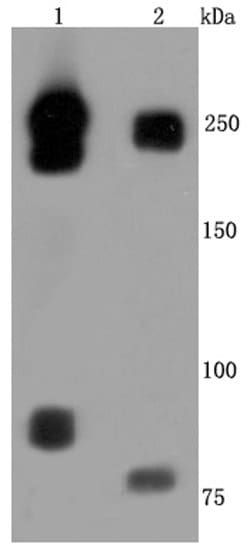
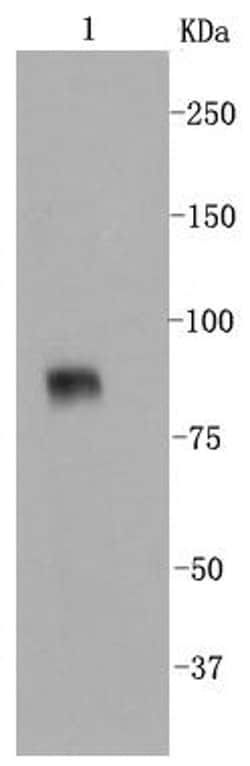
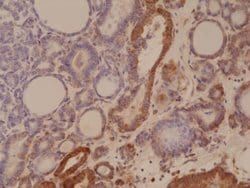
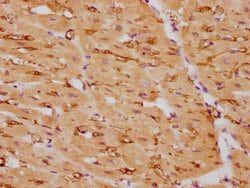
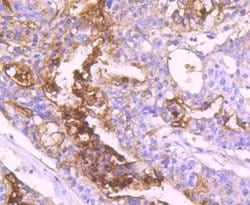
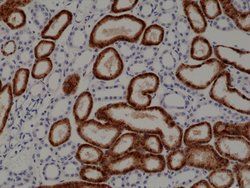
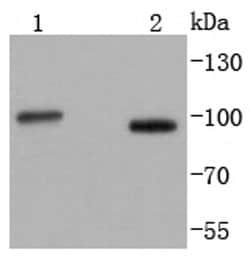
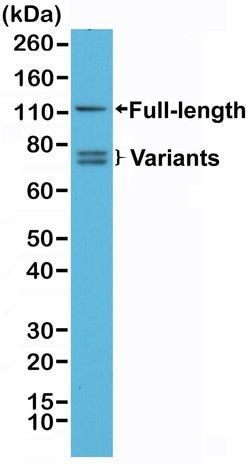
Immunohistochemistry (Paraffin), Western Blot
Clone
RM315
Conjugate
Unconjugated
Gene
Ncam1
Gene Alias
adhesion molecule, antigen recognized by monoclonal antibody 5.1H11, Cd56, CD-56, CD56 120 kDa GPI-linked isoform, CD56 140 kDa isoform, CD56 140 kDa VASE isoform, E NCAM, E-NCAM, MSK39, N CAM1, NCAM, N-CAM, Ncam1, N-CAM-1, NCAM-1, NCAMC, NCAM-C, neural cell adhesion molecule, Neural cell adhesion molecule 1, neural cell adhesion molecule, NCAM, sCD56, sNCAM, soluble CD56, soluble NCAM
Host Species
Rabbit
Purification Method
Protein A
Regulatory Status
RUO
Gene ID (Entrez)
17967, 4684
Content And Storage
-20°C
Form
Liquid
Related Products
Description
- Specificity: reacts to human CD56 (NCAM1)
- It may also react to mouse CD56, as predicted by immunogen homology
- Recombinant rabbit monoclonal antibodies are produced using in vitro expression systems
- The expression systems are developed by cloning in the specific antibody DNA sequences from immunoreactive rabbits
- Then, individual clones are screened to select the best candidates for production
- The advantages of using recombinant rabbit monoclonal antibodies include: better specificity and sensitivity, lot-to-lot consistency, animal origin-free formulations, and broader immunoreactivity to diverse targets due to larger rabbit immune repertoire
- CD56 (NCAM, neural cell adhesion molecule) is a transmembrane glycoprotein of the immunoglobulin family that serves as an adhesive molecule and is ubiquitously expressed in the nervous system in isoforms ranging from 120-180 kDa
- CD56 is found on T cells and NK cells, and is involved in cell migration, axonal growth, pathfinding and synaptic plasticity
- Polysialic modification results in reduction of CD56-mediated cell adhesion
- Through its extracellular region, CD56 mediates homophilic and heterophilic interactions by binding extracellular matrix components such as laminin and integrins
- CD56 is expressed on most neuroectodermal derived cell lines, tissues and neoplasms such as retinoblastoma, medulloblastoma, astrocytomas and neuroblastoma
- Further, CD56 is a widely used neuroendocrine marker with a high sensitivity for neuroendocrine tumors and ovarian granulosa cell tumors
- Diseases associated with CD56 dysfunction include rabies and blastic plasmacytoid dendritic cell neoplasms.