Phospho-MCL-1 (Ser64) Polyclonal Antibody, Invitrogen™
Manufacturer: Thermo Scientific
Select a Size
| Pack Size | SKU | Availability | Price |
|---|---|---|---|
| Each of 1 | PIPA5105196-Each-of-1 | In Stock | ₹ 46,502.50 |
PIPA5105196 - Each of 1
In Stock
Quantity
1
Base Price: ₹ 46,502.50
GST (18%): ₹ 8,370.45
Total Price: ₹ 54,872.95
Antigen
Phospho-MCL-1 (Ser64)
Classification
Polyclonal
Conjugate
Unconjugated
Gene
MCL1
Gene Alias
AW556805; BCL2 family apoptosis regulator; BCL2L3; bcl2-L-3; Bcl-2-like protein 3; bcl-2-related protein EAT/mcl1; EAT; Induced myeloid leukemia cell differentiation protein Mcl-1; induced myeloid leukemia cell differentiation protein Mcl-1 homolog; Mcl1; Mcl-1; mcl1/EAT; MCL1-ES; MCL1L; MCL1S; MCL-1S; MGC104264; MGC1839; myeloid cell leukemia 1; myeloid cell leukemia ES; myeloid cell leukemia sequence 1; myeloid cell leukemia sequence 1 (BCL2-related); TM
Host Species
Rabbit
Purification Method
sequential chromatography
Regulatory Status
RUO
Gene ID (Entrez)
17210, 4170, 60430
Content And Storage
-20°C
Form
Liquid
Applications
Immunohistochemistry (Paraffin), Western Blot
Concentration
1 mg/mL
Formulation
PBS with 50% glycerol and 0.02% sodium azide; pH 7.4
Gene Accession No.
P97287, Q07820, Q9Z1P3
Gene Symbols
MCL1
Immunogen
A synthesized peptide derived from human MCL1(Accession Q07820), corresponding to amino acid residues around phosphorylated Ser64.
Quantity
100 μL
Primary or Secondary
Primary
Target Species
Human, Mouse, Rat
Product Type
Antibody
Isotype
IgG
Related Products
Description
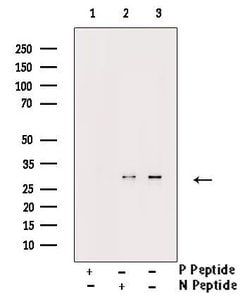
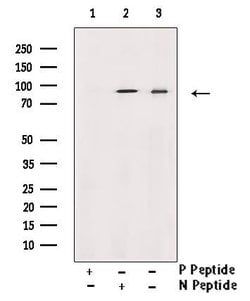
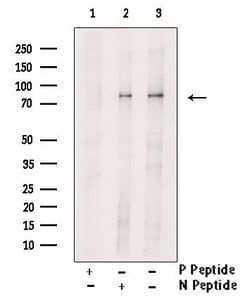
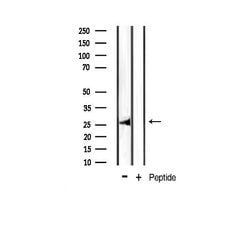
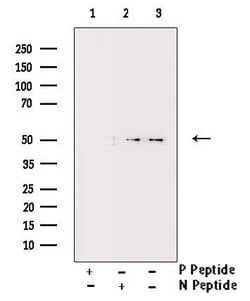
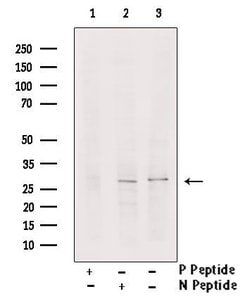
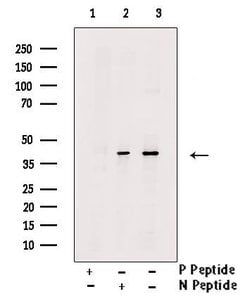
- Antibody detects endogenous levels of MCL1 only when phosphorylated at Ser64
- MCL1 (Myeloid cell leukemia-1) belongs to the Bcl-2 family and is involved in programing, differentiation and concomitant maintenance of cell viability, but not of proliferation
- Isoform 1 of MCL1 inhibits apoptosis while isoform 2 promotes it
- The carboxy terminal of MCL1 and bcl-2 share significant sequence homology
- Expression of MCL1 is increased upon exposure of ML-1 cells to various types of DNA damaging agents (e.g
- ionizing radiation, μgtraviolet radiation, and alkylating drugs) along with increases in GADD45 and Bax and a decrease in bcl-2
- Enhanced expression of MCL1, prominently associated with mitochondria, complements the continued expression of bcl-2 in ML-1 cells undergoing differentiation
- Like bcl-2, MCL1 has the capacity to promote cell viability under conditions that otherwise cause apoptosis
- While the mechanism by which MCL1 inhibits apoptosis is not known, it is thought that it may heterodimerize and neutralize pro-apoptotic members of the Bcl-2 family such as Bim or Bak
- MCL1 was originally identified in differentiating myeloid cells, but has since been shown to be expressed in multiple cell types
- MCL1 is essential for embryogenesis and for the development and maintenance of B and T lymphocytes in animals
- MCL1 exists as at least two distinct isoforms designated MCL1L and MCL1S
- In marked contrast to the larger isoform of MCL1, overexpression of MCL1S promotes cell death.