PIPA532324
CD4 Polyclonal Antibody, Invitrogen™
Manufacturer: Thermo Scientific
Select a Size
| Pack Size | SKU | Availability | Price |
|---|---|---|---|
| Each of 1 | PIPA532324-Each-of-1 | In Stock | ₹ 46,814.00 |
PIPA532324 - Each of 1
In Stock
Quantity
1
Base Price: ₹ 46,814.00
GST (18%): ₹ 8,426.52
Total Price: ₹ 55,240.52
Antigen
CD4
Classification
Polyclonal
Gene
CD4
Gene Alias
CD4 antigen p55, CD4 receptor, T-cell surface antigen T4/Leu-3, T-cell surface glycoprotein CD4
Host Species
Rabbit
Purification Method
Antigen affinity chromatography
Regulatory Status
RUO
Gene ID (Entrez)
920
Content And Storage
-20° C, Avoid Freeze/Thaw Cycles
Form
Liquid
Applications
Immunohistochemistry (Paraffin)
Conjugate
Unconjugated
Gene Accession No.
P01730
Gene Symbols
CD4
Immunogen
Synthetic peptide corresponding to internal region of human CD4.
Quantity
500 μL
Primary or Secondary
Primary
Target Species
Human
Product Type
Antibody
Isotype
IgG
Related Products

Description
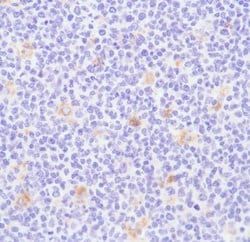
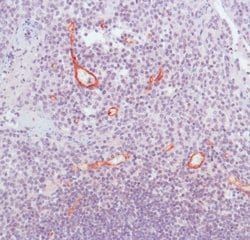
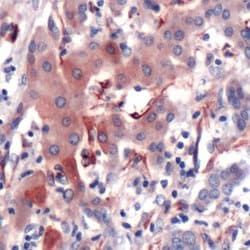
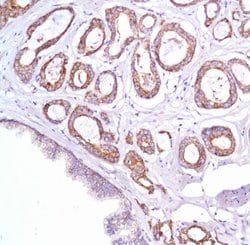
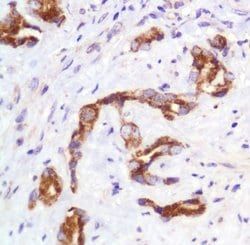
- Heat-mediated antigen retrieval is recommended prior to staining, using an EDTA buffer, pH 6.0, for 10 minutes followed by cooling at room temperature for 20 min
- Following antigen retrieval, incubate samples with primary antibody for 30 min at room temperature
- A suggested positive control is tonsil tissue
- The CD4 antigen is involved in the recognition of MHC class II molecules and is a co-receptor for HIV
- CD4 is primarily expressed in a subset of T-lymphocytes, also referred to as T helper cells, but may also be expressed by other cells in the immune system, such as monocytes, macrophages, and dendritic cells
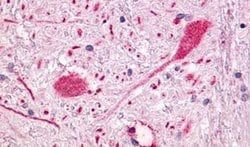
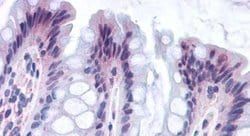
- At the tissue level, CD4 expression may be detected in thymus, lymph nodes, tonsils, and spleen, and also in specific regions of the brain, gut, and other non-lymphoid tissues
- CD4 functions to initiate or augment the early phase of T-cell activation through its association with the T-cell receptor complex and protein tyrosine kinase, Lck
- It may also function as an important mediator of direct neuronal damage in infectious and immune-mediated diseases of the central nervous system
- Multiple alternatively spliced transcripts have been identified in this gene [RefSeq, July 2017].