MilliporeSigma™ IFNAR1, Mouse, Unlabeled, Clone: 4G8,
Manufacturer: MilliporeSigma™
Select a Size
| Pack Size | SKU | Availability | Price |
|---|---|---|---|
| Each of 1 | MABF939-Each-of-1 | In Stock | ₹ 41,813.98 |
MABF939 - Each of 1
In Stock
Quantity
1
Base Price: ₹ 41,813.98
GST (18%): ₹ 7,526.516
Total Price: ₹ 49,340.496
Antigen
IFNAR1
Classification
Monoclonal
Concentration
Please refer to lot specific datasheet.
Formulation
Purified mouse IgG1κ in buffer containing 0.1M Tris-Glycine (pH 7.4), 150mM NaCl with 0.05% Sodium Azide.
Gene Accession No.
P17181
Immunogen
His-tagged recombinant human IFNAR1 extracellular domain.
Quantity
100 μg
Research Discipline
Inflammation & Immunology
Gene ID (Entrez)
NP_000620
Target Species
Human
Form
Purified
Applications
Flow Cytometry
Clone
4G8
Conjugate
Unconjugated
Gene
IFNAR1, IFNAR
Host Species
Mouse
Purification Method
Protein G Purified
Regulatory Status
RUO
Primary or Secondary
Primary
Test Specificity
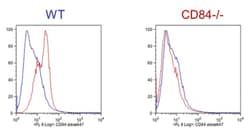
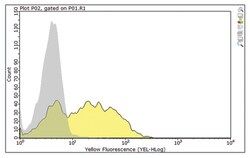
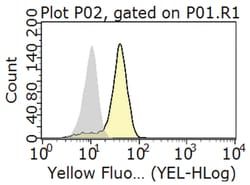
Clone 4G8 detected a loss of HEK293 cell surface IFNAR1 immunoreactivity following lentivirus-mediated cellular IFNAR1 shRNA delivery or West Nile virus (WNV) infection (Lubick, K.J., et al. (2015). Cell Host Microbe. 18(1):61-74).
Content And Storage
Stable for 1 year at 2°-8°C from date of receipt.
Isotype
IgG1 κ
Related Products




Description
- Interferon alpha/beta receptor 1 (UniProt P17181; also known as CRF2-1, Cytokine receptor class-II member 1, Cytokine receptor family 2 member 1, IFN-alpha/beta receptor 1, IFN-R-1, Type I interferon receptor 1) is encoded by the IFNAR1 (also known as IFNAR) gene (Gene ID 3454) in human
- Interferons (IFNs) are cytokines whose prouction and release by host cells are induced in the presence of pathogens (e.g
- viruses, bacteria, parasites) and tumor cells
- More than twenty distinct IFN genes and proteins have been identified and classified into three main types
- Type I IFNs (IFN-α, IFN-β, IFN-ε, IFN-κ, and IFN-ω) exert their function via binding IFN-α/β receptor (encoded by the IFNAR1 and IFNAR2 gene, respectively)
- Ligation of IFNAR by IFN-I results in activation of the Janus kinases, Jak1 and Tyk2, which in turn phosphorylates STAT1 and STAT2, resulting in recruitment of IRF9 to form the IFN-stimulated gene factor 3 (ISGF3) transcription factor
- ISGF3 then translocates to the nucleus, where it binds IFN-stimulated response elements (ISREs) and drives the transcription of IFN-stimulated genes (ISGs)
- IFNAR1 is phosphorylated by Tyk2 and PKD2 upon IFN-I stimulation, leading to IFNAR1 ubiquitination and lysosomal degradation
- IFNAR1 is also phosphorylated by p38 MAP kinase in response to non-IFN stimuli, including the PERK-dependent unfolded protein response (UPR), ligation of pattern recognition receptors (PRRs), or through signaling via other inflammatory cytokines or growth factors including VEGF, IL-1β and TNFα
- Encephalitic flaviviruses antagonize IFN-I signaling by inhibiting IFNAR1 surface expression, where the viral nonstructural protein 5 (NS5) targets cellular prolidase (PEPD) that is required for IFNAR1 maturation and accumulation.