NBS1 Monoclonal Antibody (1D7), Invitrogen™
Manufacturer: Thermo Scientific
Select a Size
| Pack Size | SKU | Availability | Price |
|---|---|---|---|
| Each of 1 | MA123265-Each-of-1 | In Stock | ₹ 52,465.50 |
MA123265 - Each of 1
In Stock
Quantity
1
Base Price: ₹ 52,465.50
GST (18%): ₹ 9,443.79
Total Price: ₹ 61,909.29
Antigen
NBS1
Classification
Monoclonal
Concentration
1 mg/mL
Formulation
PBS with 20% glycerol and no preservative; pH 7
Gene Accession No.
O60934, Q9JIL9, Q9R207
Gene Symbols
NBN
Immunogen
The complete coding region of the human p95/NBS1 expressed in E. coli.
Quantity
100 μL
Primary or Secondary
Primary
Target Species
Human, Mouse, Rat
Product Type
Antibody
Isotype
IgG1
Applications
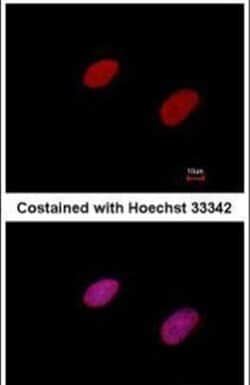
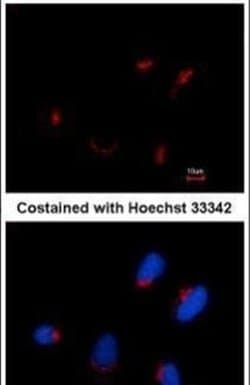
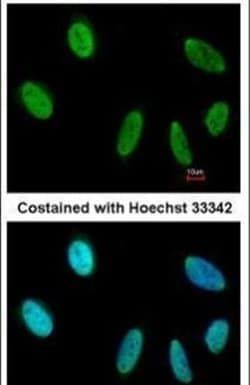
Immunocytochemistry, Immunoprecipitation, Western Blot
Clone
1D7
Conjugate
Unconjugated
Gene
NBN
Gene Alias
AT V1; AT V2; ATV; AT-V1; AT-V2; Cell cycle regulatory protein p95; FLJ10155; I79_012607; MGC87362; Nbn; NBS; NBS1; nibrin; Nijmegen breakage syndrome 1 (nibrin); Nijmegen breakage syndrome protein 1; Nijmegen breakage syndrome protein 1 homolog; OTTHUMP00000204088; P95; p95 protein of the MRE11/RAD50 complex; p95-NBS1
Host Species
Mouse
Purification Method
Protein G
Regulatory Status
RUO
Gene ID (Entrez)
27354, 4683, 85482
Content And Storage
Store at 4°C short term. For long term storage, store at -20°C, avoiding freeze/thaw cycles.
Form
Liquid
Related Products



Description
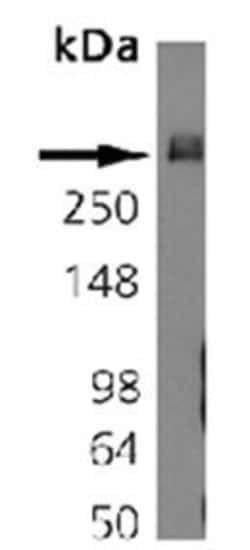
- Predicted molecular weight 91 kDa
- Positive control: MCF7, HeLa (NE), Raji
- The p95 gene (identical to NBS1 and nibrin) is a member of the hMre11/hRad50 double-strand break complex
- This protein complex has been implicated in Nijmegen breakage syndrome, an autosomal recessive disorder marked by increased cancer incidence, cell cycle checkpoint deficits, and ionizing radiation sensitivity, thus revealing a direct molecular link between double-strand break repair and cell cycle checkpoint functions.