PIPA5105125
Phospho-ENSA (Ser67) Polyclonal Antibody, Invitrogen™
Manufacturer: Thermo Scientific
Select a Size
| Pack Size | SKU | Availability | Price |
|---|---|---|---|
| Each of 1 | PIPA5105125-Each-of-1 | In Stock | ₹ 46,502.50 |
PIPA5105125 - Each of 1
In Stock
Quantity
1
Base Price: ₹ 46,502.50
GST (18%): ₹ 8,370.45
Total Price: ₹ 54,872.95
Antigen
Phospho-ENSA (Ser67)
Classification
Polyclonal
Conjugate
Unconjugated
Gene
ENSA
Gene Alias
1700020C18Rik; 2610007F17Rik; AI451924; Alpha-endosulfine; ARPP-19e; endosulfine alpha; endosulfine-alpha variant 1; endosulfine-alpha variant 3; ENSA
Host Species
Rabbit
Purification Method
sequential chromatography
Regulatory Status
RUO
Gene ID (Entrez)
2029, 56205, 60334
Content And Storage
-20°C
Form
Liquid
Applications
Immunohistochemistry (Paraffin), Western Blot
Concentration
1 mg/mL
Formulation
PBS with 50% glycerol and 0.02% sodium azide; pH 7.4
Gene Accession No.
O43768, P60840, P60841
Gene Symbols
ENSA
Immunogen
A synthesized peptide derived from human ENSA(Accession O43768), corresponding to amino acid residues around phosphorylated Ser62.
Quantity
100 μL
Primary or Secondary
Primary
Target Species
Human, Mouse, Rat
Product Type
Antibody
Isotype
IgG
Related Products
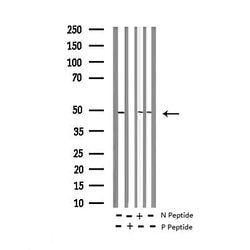
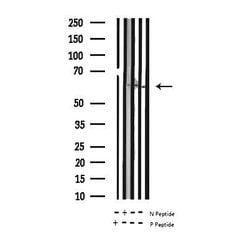
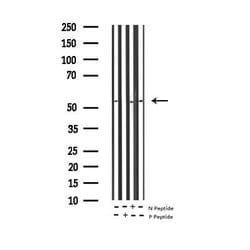
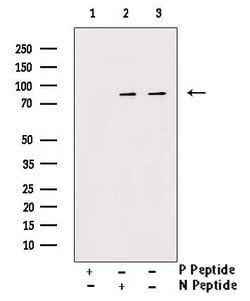
Description
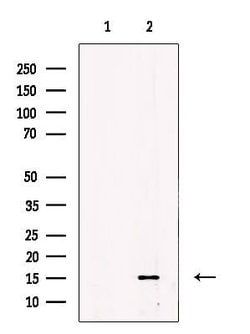
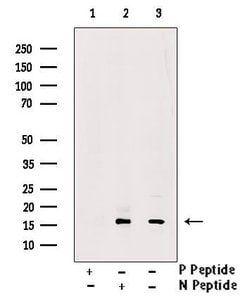
- Antibody detects endogenous levels of ENSA only when phosphorylated at Ser67
- The protein encoded by this gene belongs to a highly conserved cAMP-regulated phosphoprotein (ARPP) family
- This protein was identified as an endogenous ligand for the sulfonylurea receptor, ABCC8/SUR1
- ABCC8 is the regulatory subunit of the ATP-sensitive potassium (KATP) channel, which is located on the plasma membrane of pancreatic beta cells and plays a key role in the control of insulin release from pancreatic beta cells
- This protein is thought to be an endogenous regulator of KATP channels
- In vitro studies have demonstrated that this protein modulates insulin secretion through the interaction with KATP channel, and this gene has been proposed as a candidate gene for type 2 diabetes
- At least eight alternatively spliced transcript variants encoding distinct isoforms have been observed.