GLIS1 Monoclonal Antibody (7-14), Active Motif™
Rat Monoclonal Antibody
Manufacturer: Fischer Scientific
The price for this product is unavailable. Please request a quote
Antigen
GLIS1
Concentration
1 mg/mL
Classification
Monoclonal
Form
Liquid
Regulatory Status
RUO
Formulation
PBS with 30% glycerol and 0.035% sodium azide; pH 7.5
Gene Alias
Gli homologous protein 1; Gli5; Gli6; GliH1; GLI-Kruppel family member GLI6; GLIS family zinc finger 1; GLIS family zinc finger 1 (predicted)-like; Glis1; Glis1 Kruppel-like zinc finger protein; GLI-similar 1; LOC100354616; Zinc finger protein GLIS1; zinc finger transcription factor Gli5
Gene Symbols
GLIS1
Isotype
IgG1 κ
Purification Method
Protein G
Product Type
Antibody
Clone
7-14
Applications
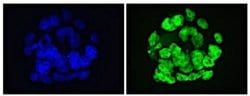
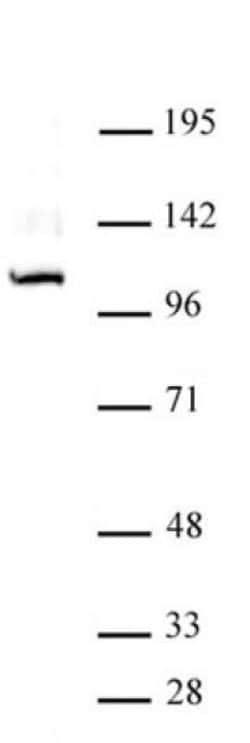
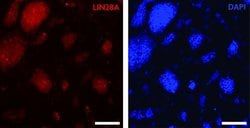
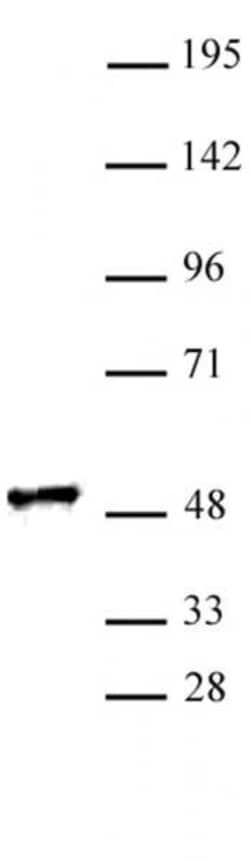
Immunocytochemistry, Immunofluorescence, Western Blot
Conjugate
Unconjugated
Host Species
Rat
Target Species
Human, Mouse
Gene Accession No.
Q8K1M4, Q8NBF1
Gene ID (Entrez)
148979, 230587
Immunogen
This antibody was raised against a peptide within the amino-terminal half of human GLIS1 (GLI-similar 1), which shares homology with mouse GLIS1.
Primary or Secondary
Primary
Content And Storage
-20°C, Avoid Freeze/Thaw Cycles
Gene
GLIS1
Related Products

Description
- Description Glis1 (Gli similar 1) is also known as Gli related Kruppel-like zinc finger 1 and is encoded by the Glis1 gene located on chromosome 1 in humans
- It belongs to the Kruppel-like zinc finger family of proteins that constitute mainly of transcription factors and is hence studied for its role in target gene activation and repression, specifically during embryonic development
- Glis1 contains five tandem zinc finger motifs, which is the region at which it shares close homology to Glis2 and Glis 3
- More recent studies on Glis1 show its interaction with Oct 3/4, Sox2 and KLF4 in efficient generation of iPSC.