Phospho-MOB4A (Thr35) Polyclonal Antibody, Invitrogen™
Manufacturer: Thermo Scientific
Select a Size
| Pack Size | SKU | Availability | Price |
|---|---|---|---|
| Each of 1 | PIPA5105219-Each-of-1 | In Stock | ₹ 46,502.50 |
PIPA5105219 - Each of 1
In Stock
Quantity
1
Base Price: ₹ 46,502.50
GST (18%): ₹ 8,370.45
Total Price: ₹ 54,872.95
Antigen
Phospho-MOB4A (Thr35)
Classification
Polyclonal
Conjugate
Unconjugated
Gene
MOB1B
Gene Alias
1110003E08Rik; AU015450; B230364F10; MATS2; MGC33910; MOB kinase activator 1B; mob1 homolog 1A; MOB1 Mps One Binder homolog B; MOB1, Mps One Binder kinase activator-like 1A; mob1A; MOB1B; MOB4A; Mobkl1a; mps one binder kinase activator-like 1A
Host Species
Rabbit
Purification Method
sequential chromatography
Regulatory Status
RUO
Gene ID (Entrez)
360920, 68473, 92597
Content And Storage
-20°C
Form
Liquid
Applications
Immunocytochemistry, Western Blot
Concentration
1 mg/mL
Formulation
PBS with 50% glycerol and 0.02% sodium azide; pH 7.4
Gene Accession No.
Q7L9L4, Q8BPB0
Gene Symbols
MOB1B
Immunogen
A synthesized peptide derived from human MOB1B(Accession Q7L9L4), corresponding to amino acid residues around phosphorylated Thr35.
Quantity
100 μL
Primary or Secondary
Primary
Target Species
Human, Mouse, Rat
Product Type
Antibody
Isotype
IgG
Related Products
Description
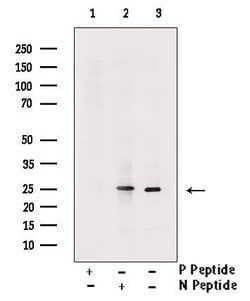
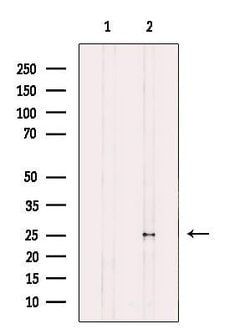
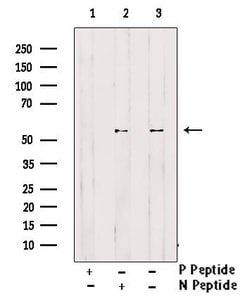
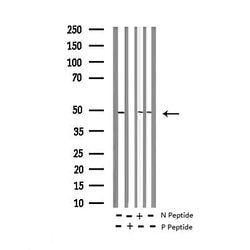
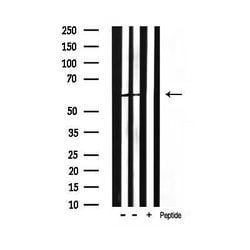
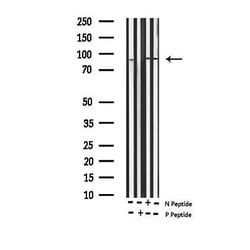
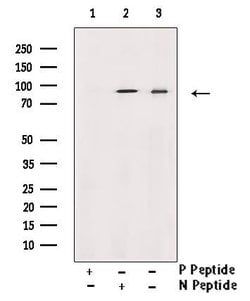
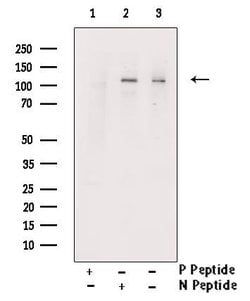
- Antibody detects endogenous levels of MOB1A only when phosphorylated at Thr35
- MOB4A is similar to the yeast Mob1 protein
- Yeast Mob1 binds Mps1p, a protein kinase essential for spindle pole body duplication and mitotic checkpoint regulation
- Mob4A regulates NDR1 and NDR2 kinase activity, widely expressed nuclear serine-threonine kinases that have been implicated in cell proliferation and/or tumor progression.