Caspase 8 Recombinant Rabbit Monoclonal Antibody (SZ01-08), Invitrogen™
Manufacturer: Thermo Scientific
Select a Size
| Pack Size | SKU | Availability | Price |
|---|---|---|---|
| Each of 1 | PIMA532023-Each-of-1 | In Stock | ₹ 47,481.50 |
PIMA532023 - Each of 1
In Stock
Quantity
1
Base Price: ₹ 47,481.50
GST (18%): ₹ 8,546.67
Total Price: ₹ 56,028.17
Antigen
Caspase 8
Classification
Monoclonal
Concentration
1 mg/mL
Formulation
TBS with 0.05% BSA, 40% Glycerol and 0.05% sodium azide, pH 7.4
Gene Accession No.
Q14790
Gene Symbols
Casp8
Immunogen
Synthetic peptide within Human Caspase-8 aa 207-256
Quantity
100 μL
Primary or Secondary
Primary
Target Species
Human
Product Type
Antibody
Isotype
IgG
Applications
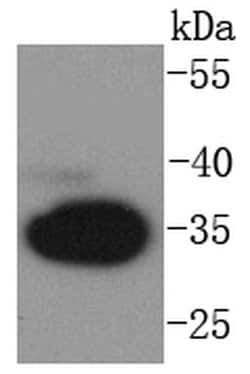
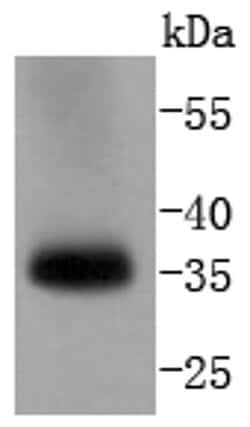
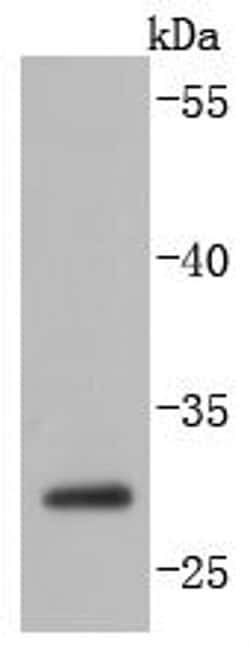
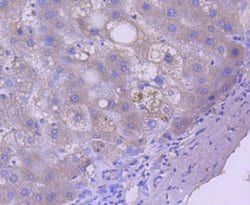
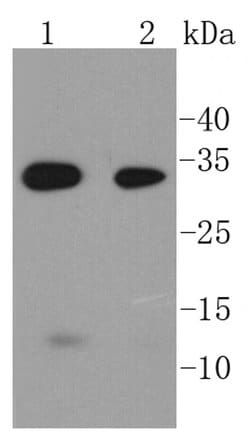
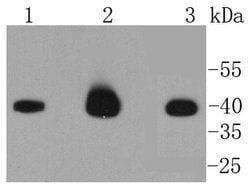
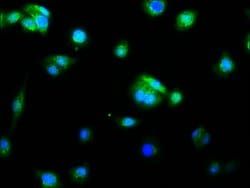
Immunocytochemistry, Immunohistochemistry, Western Blot, Western Blot
Clone
SZ01-08
Conjugate
Unconjugated
Gene
Casp8
Gene Alias
ALPS2B, apoptosis-related cysteine peptidase, apoptotic cysteine protease, Apoptotic protease Mch-5, CAP4, CASP8, CASP-8, caspase 8, caspase 8, apoptosis-related cysteine peptidase, caspase 8, apoptosis-related cysteine protease, Caspase8, caspase-8, Caspase-8 precursor, Caspase-8 subunit p10, Caspase-8 subunit p18, EC 3.4.22.61, FADD-homologous ICE/ced-3-like protease, FADD-like ICE, Fas-linked ICE-like protease, FLICE, FLJ17672, ICE8, ICE-like apoptotic protease 5, MACH, MACH-alpha-1/2/3 protein, MACH-beta-1/2/3/4 protein, MCH5, MGC78473, MORT1-associated ced-3 homolog, OTTHUMP00000163720, OTTHUMP00000165063, OTTHUMP00000206557, OTTHUMP00000206581
Host Species
Rabbit
Purification Method
Protein A
Regulatory Status
RUO
Gene ID (Entrez)
841
Content And Storage
Store at 4°C short term. For long term storage, store at -20°C, avoiding freeze/thaw cycles.
Form
Liquid
Related Products

Description
- Recombinant rabbit monoclonal antibodies are produced using in vitro expression systems
- The expression systems are developed by cloning in the specific antibody DNA sequences from immunoreactive rabbits
- Then, individual clones are screened to select the best candidates for production
- The advantages of using recombinant rabbit monoclonal antibodies include: better specificity and sensitivity, lot-to-lot consistency, animal origin-free formulations, and broader immunoreactivity to diverse targets due to larger rabbit immune repertoire
- Caspase 8 (CASP8) is a member of the cysteine-aspartic acid protease (caspase) family
- Sequential activation of caspases play a central role in the execution-phase of cell apoptosis
- Caspases exist as inactive proenzymes composed of a pro-domain, a large protease subunit, and a small protease subunit
- Activation of caspases requires proteolytic processing at conserved internal aspartic residues to generate a heterodimeric enzyme consisting of the large and small subunits
- Caspase 8 is involved in the programmed cell death induced by Fas and various apoptotic stimuli
- The N-terminal FADD-like death effector domain of Caspase 8 suggests that it may interact with Fas-interacting protein FADD
- Caspase 8 was detected in the insoluble fraction of the affected brain region from Huntington disease patients but not in those from normal controls, which implicated the role in neurodegenerative diseases
- Caspase 8 binds to the death effector domain (DED) of FADD through an analogous DED domain present in tandem in the pro-form of the Caspase 8 protein
- Activated Caspase 8 then activates other downstream caspases including Caspase 9, thereby committing the cell to undergo apoptosis
- In addition, Caspase 8 also reacts with Jurkat cells and Tonsil
- Overexpression of Caspase 8 induces apoptosis, which can be blocked by inhibitors specific for the ICE family
- Many alternatively spliced transcript variants encoding different isoforms have been described for Caspase 8, however, not all variants have had their full-length sequences determined.