CD11a (LFA-1alpha) Recombinant Rabbit Monoclonal Antibody (SC56-01), Invitrogen™
Manufacturer: Thermo Scientific
Select a Size
| Pack Size | SKU | Availability | Price |
|---|---|---|---|
| Each of 1 | PIMA532189-Each-of-1 | In Stock | ₹ 47,481.50 |
PIMA532189 - Each of 1
In Stock
Quantity
1
Base Price: ₹ 47,481.50
GST (18%): ₹ 8,546.67
Total Price: ₹ 56,028.17
Antigen
CD11a (LFA-1alpha)
Classification
Monoclonal
Concentration
1 mg/mL
Formulation
TBS with 0.05% BSA, 40% Glycerol and 0.05% sodium azide, pH 7.4
Gene Accession No.
P20701
Gene Symbols
ITGAL
Immunogen
Synthetic peptide within Human CD11a aa 1135-1170
Quantity
100 μL
Primary or Secondary
Primary
Target Species
Human
Product Type
Antibody
Isotype
IgG
Applications
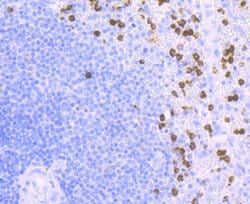
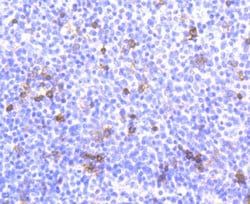
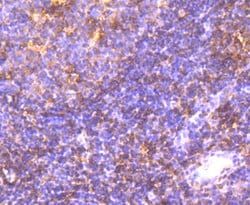
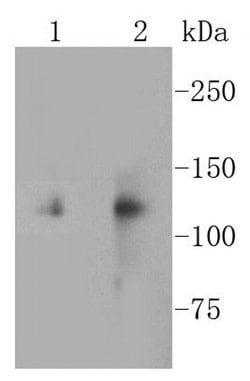
Flow Cytometry, Immunocytochemistry, Immunohistochemistry, Western Blot, Western Blot
Clone
SC56-01
Conjugate
Unconjugated
Gene
ITGAL
Gene Alias
(p180), alpha L integrin, antigen CD11A (p180), antigen CD11A (p180), lymphocyte function-associated antigen 1, alpha polypeptide, antigen CD11A p180, CD11 antigen-like family member A, CD11a, integrin alpha L, integrin alphaL, integrin alpha-L, integrin alpha-L precursor, integrin gene promoter, integrin subunit alpha L, integrin surface receptor, integrin, alpha L, integrin, alpha L (antigen CD11A (p180), lymphocyte function-associated antigen 1, alpha polypeptide), ITGAL, Leukocyte adhesion glycoprotein LFA-1 alpha chain, leukocyte function-associated molecule 1 alpha chain, LFA-1, LFA-1 alpha, LFA1A, LFA-1A, Ly-15, Ly-21, lymphocyte antigen 15, lymphocyte function associated antigen 1, alpha polypeptide, lymphocyte function-associated antigen 1, lymphocyte function-associated antigen 1, alpha polypeptide, lymphocyte function-associated antigen-1
Host Species
Rabbit
Purification Method
Protein A
Regulatory Status
RUO
Gene ID (Entrez)
3683
Content And Storage
Store at 4°C short term. For long term storage, store at -20°C, avoiding freeze/thaw cycles.
Form
Liquid
Related Products

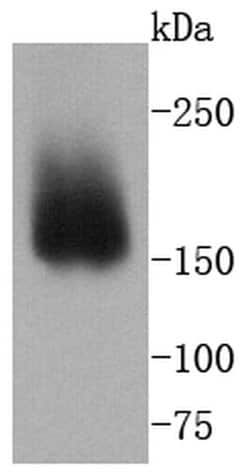
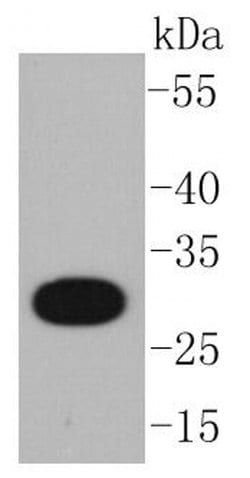
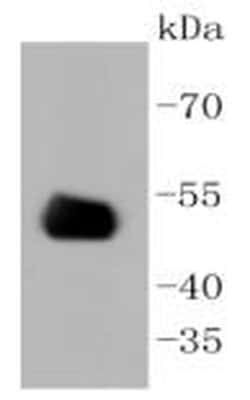
Description
- Recombinant rabbit monoclonal antibodies are produced using in vitro expression systems
- The expression systems are developed by cloning in the specific antibody DNA sequences from immunoreactive rabbits
- Then, individual clones are screened to select the best candidates for production
- The advantages of using recombinant rabbit monoclonal antibodies include: better specificity and sensitivity, lot-to-lot consistency, animal origin-free formulations, and broader immunoreactivity to diverse targets due to larger rabbit immune repertoire
- CD11a (LFA-1 alpha, ITGAL) together with CD18 constitute leukocyte function-associated antigen 1 (LFA-1), the alphaLbeta2 integrin
- CD11a is implicated in activation of LFA-1 complex
- CD11a plays a central role in leukocyte intercellular adhesion through interactions with its ligands, ICAMs 1-3 (intercellular adhesion molecules 1 through 3), and also functions in lymphocyte costimulatory signaling
- CD11a is expressed on the plasma membrane of leukocytes in a low-affinity conformation
- Cell stimulation by chemokines or other signals leads to induction the high-affinity conformation, which supports tight binding of CD11a to its ligands, the intercellular adhesion molecules ICAM-1, -2, -3
- CD11a is thus involved in interaction of various immune cells and in their tissue-specific settlement, but participates also in control of cell differentiation and proliferation and of T-cell effector functions
- Blocking of CD11a function by specific antibodies or small molecules has become an important therapeutic approach in treatment of multiple inflammatory diseases
- For example, humanized anti- CD11a antibody Efalizumab (Raptiva) is being used to interfere with T cell migration to sites of inflammation, binding of cholesterol-lowering drug simvastatin to CD11a allosteric site leads to immunomodulation and increase in lymphocytic cholinergic activity
- Two transcript variants encoding different isoforms of CD11a have been found
- Diseases associated with CD11a dysfunction include benign cephalic histiocytosis and leukocyte adhesion deficiency.